This blog is best viewed with the latest browser and an open mind!

Friday, April 21, 2023

The 'Other' Heresies

Mexican photographer Pedro Meyer is as renowned for his powerful and provocative photographs as he is for his pioneering work with digital imaging. Meyer’s photographs consistently test the limits of truth, fiction and reality. With the advent of digital photography in the early 1990s, Meyer evolved from a documentary photographer who created so-called “straight photographs” into a digital-documentarian who often combines photographic elements from disparate times and places to arrive at a different or higher truth. Pedro's oft-expressed contention that all photographs — digitally manipulated or not — are equally “true” and “untrue” has been labeled “heretical” in the orthodox documentary photography community.


While fellow Apple-user Pedro Meyer (one of the first to adopt this platform and launch the very first intearactive CD-ROM!) may have his exhibition - Heresies - opening in 60 museums in almost as many countries (we are thrilled that T2F, where the exhibition opens on 21st October, has been selected as the Pakistani venue).

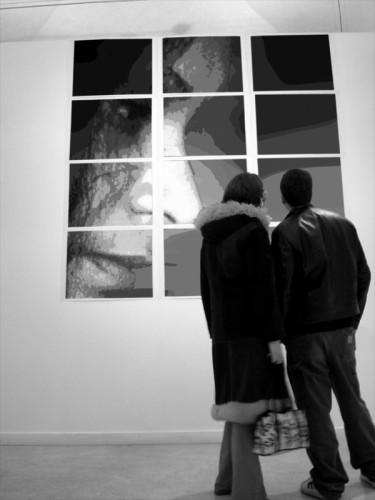
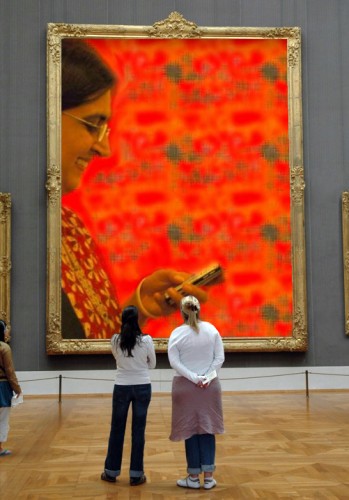
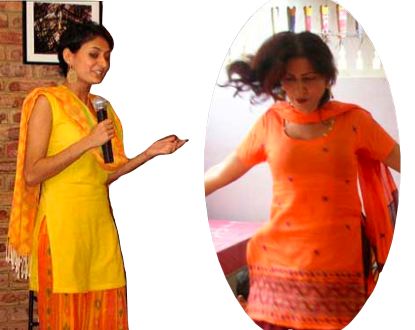
There are others, like me :), whose photographs have also made it to some of the greatest (virtual!) halls in the world. Here are just 2 of my examples.

"Happy viewing", as the Senator said!
;-)

Nuzhat

Sabeen

See you at the real Heresies, where a selection of large original museum quality prints of Pedro's works will be displayed and changed almost weekly!

Please do keep checking out the schedule at T2F's website for the exciting related events, like workshops, talks, discussions, and presentations during the weeks that this unique exhibition is on, unless you're on FB and already visit T2F Pages for updates.

Oh ... did you know that you can also subscribe to T2F's Events RSS Feed so you get the news automatically? And, as the icing on the cake, sign up for SMS alerts and get timely reminders too. This saves you the task of 'remembering to remember' to go to the website and saves me answering calls - usually when an event is actually happening - Maddy, please note ;-) - about when and what time it's happening.

Labels: , , , , , , , , , , ,

A great leap forward

When my daughter screened her very first short film (Bindiya Chamkay Gee) - during one of T2F's Cinema for Change sessions - the star of the documentary was also the star of the evening, answering questions and countering comments (some rather accusatory) with a confidence that many had not expected. But then they had never met a Hij∂a like Bindiya!


  Among the post-event post-Q&A discussions that followed within small groups (and the place was buzzing) there was one recurring thought: Given the scale, number, and variety of problems developing countries face, it was a wild fantasy for Bindiya or her supporters to imagine that the difficulties encountered by such a small subset of the population would even be on the radar of the governments of any of the countries in the majority world (to use Shahidul Alam's term of choice). Some felt that the vote-bank was not large enough for any politician to try and woo. Others, that any decent politician (yes, it is possible, though admittedly rare) who truly wished to support such a cause would be mocked so much that he would lose his general credibility.

It was a joy, then, to see this news item from our 'neighbouring country' (a euphemism that our state media uses for India, lest the invocation of the actual name result in that evil genie materialising and devouring us).
DISCRIMINATED AGAINST and forced to live in secluded communities, India’s hijras have always had to fight for basic entitlements. Two weeks ago, however, a major victory was achieved when Tamil Nadu added a third gender to ration cards. Hijras may now enter a ‘T’ (for transgender) in place of a ‘M’ or ‘F’ on ration cards. The move makes Tamil Nadu the first Indian state to officially recognise its hijra citizens.
Incidentally, the article is by Morgan Harrington, who was at Hampshire College with our daughter. Read the whole story

Labels: , , , , , , ,

Saturday, April 24, 2021


(Sabeen Mahmud's Poem)

i am tired.

tired of running

tired of the struggle

tired of arguing

tired of explaining

tired of the machinations of the rich

tired of the mumbo jumbo

tired of the greedy

tired of the bored

tired of the dumb

tired of the petty

tired of waiting for another day

tired of being polite

tired of corporate crime

tired of generals

tired of taxes

tired of banks

tired of coping

tired of the silence

tired of the battles

tired of the smug

tired of the manipulators

tired of being tired

tired of life

stop the world. i want to get off.


•


Here is my poem on her

•

Transliterations by Saif Mahmood

•

English Version by Sophia Pandeya


Labels: , , , , , , , , , ,

Thursday, June 20, 2019

Sabeen: A Letter and a Tribute

An old letter from Sabeen on one of her birthdays

Page 1


Page 2

Click on the letters to see them in readable size

•

'You refused to cower in silence': A letter to fallen Pakistani comrade Sabeen Mahmud

Beena Sarwar  · Yesterday · 08:15 am
Dear Sabeen,

Photo: Zaheer A. Kidvai
Old friend, comrade, upholder of all kinds of freedoms, lover of tehzeeb, Faiz, Eqbal Ahmad, qawwali and stray animals…

Must we write about you in the past tense?

I'm trying to remember when we first met: Karachi, in the late 1980s after I returned from college. Ammi’s friend Zaheer Kidvai who I had a rapport with introduced us. He refused to be called “uncle”. He was always just Zaheer (later Zak) – not just for me, but also for you, ten years my junior.

Zak, the maverick former merchant navy techie brought new ideas about education and technology to Karachi. He introduced Apple computers to Pakistan and took you under his wing. He saw your potential and roped you in to his zany, maverick world. You and Zak: my two die-hard coffee-loving Mac junkie friends – Zak is Zakintosh in some social media accounts.

On Saturday, his own frail health notwithstanding, he attended your funeral, the funeral of his adopted daughter. Zak’s wife Nuzhat, a fiery activist herself, has been solidly by your mother’s side in hospital as they operate to get the bullets out. A single mother with an only child. It was too late before they even got you to the hospital.

The funeral, appropriately enough, left not from your house but the place you made a home for yourself and so many others: The Second Floor, community space, coffee shop, bookstore and art gallery.

How many initiatives have we been together in since the 1990: Peace Action Karachi, People’s Resistance, Citizens for Democracy, Citizens for Free and Responsible Media, to name some. You were on the board of Madanjeet Singh’s South Asia Foundation, and among the Young Leaders network of Asia Society. I remember our excitement when South Asia Foundation invited us to Srinagar – and then the letdown when we didn’t get the visas in time.

I had fun filming my Kashmir documentary Milne Do at T2F’s old premises, with Asim’s mural on the wall: you, Basharat Peer, Saad Haroon.

There was that amazing Social Media Summit you organised in Karachi a couple of years ago, for which you flew in Indian participants. Uncomfortable with being in the limelight, you pushed me into introducing the first session and the last-minute concluding press conference with interior minister Rehman Malik. How it amused you were when people assumed I had organised it. You never wanted the limelight or to take credit – a rare quality especially in an age where everyone wants to be a star.

A numbing shock

News about Sabeen Mahmud being shot dead hit like a bolt from the blue on Friday. Friends around the world, particularly in our home city Karachi, are shell-shocked.

“How many will they kill?” asks one person after another. Many cry uncontrollably.

I call Jibran Nasir, the lawyer-activist who is in the US addressing campuses and communities around the country. Sabeen was his mentor and friend, and one of the founders of Pakistan For All with him. They had formed human chains around churches after the bomb blast at a church in Peshawar in 2012 and were fighting for an inclusive, democratic Pakistan.

Jibran was in the middle of a presentation at Columbia University in New York when texts started coming in about Sabeen. Although shocked and grief-struck, he is resolute about taking forward Sabeen’s legacy of speaking out. He plans to start all his upcoming talks with Sabeen so “Pakistanis in America can see what a gem we lost”.

Some hours later, I speak to Zak – by then it’s early morning in Pakistan. He’s just come home from the morgue and the hospital. “I haven’t cried yet,” he says. Or slept, obviously. He's been dealing with all the formalities, including police reports.

According to some reports, the police are trying to pass the attack off as a robbery attempt. No one’s buying that. Five bullets – in the chest, neck and face – the last one going through and hitting Sabeen’s mother Mahenaz, who was hit with other bullets too.

She’s numb too, says Zak. She’s been operated upon, and all but one bullet removed which they couldn’t find. She knew that Sabeen was no more when she called out to Sabeen and took her hand after the bullets hit.

They were in their car at a signal from where Zak and his wife Nuzhat had just turned left, going ahead for dinner somewhere. “We’d barely reached the next signal when Mahenaz called saying, ‘Come back, we’ve been shot,’” says Zak.

Two clean-shaven young men on a motorbike had pulled up and fired at Sabeen, who was driving, her mother next to her, the driver at the back.

Driver at the back? Why?

“Sabeen se koi kaun poochta kyun,” says Zaheer. I can hear the smile in his voice. “She did what she wanted.”

Mercifully, Sabeen died instantly. As she slumped over, they fired another shot into her back. Then they took off.

Passers-by helped get Sabeen into the back seat. The driver took them to the nearest hospital. Zak and Nuzhat reached a minute later. Nuzhat took Mahenaz to the Agha Khan hospital across town. Zak stayed with Sabeen, pronounced dead on arrival.

Engage, always engage

They had been on their way back from a well-attended event on Balochistan at the arts-café-community centre The Second Floor – a project of Sabeen’s non-profit Peaceniche started in partnership with Zak. The idea was “to promote democratic discourse and conflict resolution through intellectual and cultural engagement”.

T2F has over the years become a hub for the arts, “a community space for open dialogue” with a coffeehouse, bookshop, an exhibition gallery and a staff that adored Sabeen. It didn’t matter what religion they were or how young or old. Though straight-talking and direct, refusing to suffer fools, she treated everyone with the respect and courtesy, especially those at a social or economic disadvantage.

How many writers have had their first readings or launched books at T2F, filmmakers premiered their films, artists displayed their works, singers, musicians and playwrights shared their talents.

And political discussions. T2F was a hub for discussions about the political dissent that grew around General Musharraf’s Emergency imposed in 2007. When Sabeen learnt that a young, unknown lawyer named M. Jibran Nasir was running as an independent in the 2013 elections, with just Rs 50,000, she got in touch, heard him out, then put her full faith in him. For the next five weeks, he could use T2F for her corner meetings and campaigning – at no charge.

Most importantly she gave him a voice. Just as she gave a voice to anyone who needed it – Ahmadis, Shias, and Baloch – to anyone who felt oppressed or needed to vent and “to let out their anger”, as Jibran puts it.

For him, “Sabeen was a guide, mentor, teacher, facilitator, enabler, catalyst."

As he reminded me when I called him, “Sabeen’s legacy was to speak out. Her legacy was not to cower in silence.”

That is why she agreed to host an event at T2F on Balochistan, featuring activists like Mama Qadeer, Farzana Baloch, and Mir Mohammad Ali Talpur. They’re among those who have been highlighting the case of the missing persons of Pakistan’s least-developed province, but richest in mineral resources. A province wracked by a separatist uprising stemming from a demand for equitable treatment and a share of their own resources; resources that Pakistan has recently signed an agreement with China to develop. (Besides the $485 billion, a bonus is that “China knows how to curb insurgents”, as a brigadier told a friend recently).

Holding open discussions on Balochistan is pretty much a no-go area in Pakistan. Geo TV’s Hamid Mir was shot at last April after he had been speaking out about exactly this. The fallout from the episode led to Pakistan’s largest media group being brought to its knees.

Just a month ago, one of the country’s premier educational institutes, the Lahore University of Management Sciences cancelled a seminar titled “Unsilencing Balochistan”, featuring the same speakers who attended and addressed the T2F event, citing pressure from the government.

And yet when the young organisers approached Sabeen to hold the event there, she agreed despite the risks, the threats, the misgivings, all of which she was very aware of. She knew the risks she ran:

Another discussion on Balochistan is scheduled on May 6 at Karachi University. Will it take place now, is the question.

Already the disinformation campaign and character assassination has begun from those I call the Dirty Tricks Brigade (#DTBPk), just as it did after the attack on Hamid Mir and the cancellation of the LUMS seminar.

After Sabeen’s murder, “those who feel scared and cowed, and feel they should not speak out because it’s too dangerous, there would be no greater insult to Sabeen’s legacy if you do that”, says Jibran. “If you loved her, loved her work, loved the issues she loved, keep speaking out and raising your voice. We must do this to fulfil the dream of the Pakistan that Sabeen dreamed of, a country where there’s no discrimination in the name of religion, language, ethnicity or any pretext.”

The bullets pumped into Sabeen may have silenced her physically, but her legacy lives on. Her many admirers, friends and fellow-travellers will not let it die. For a start, here’s the link to the Tumblr site created as a tribute to Sabeen by friend and fellow techie Sabahat Ashraf that friends and followers can contribute to.

Photo by Rez
•

Labels: , , , , , , , , , , , , , ,

Wednesday, April 24, 2019

Four Years …

and not a day passes without your thoughts!


Labels: , , , , , , , ,

Thursday, February 22, 2018

A Dream Fulfilled: Mustafa Zaidi Event at T2F

Mustafa Zaidi Ki Yād Mayñ
Born 1930 Murdered 1970

It was really such a great event. All my dreams came true. For years after MZ's murder (although the courts asked us to consider it a suicide … and, sadly, many people believed it) I have been wanting to do something for his memory. Something that would put the record straight … instead of the idiotically crazy pictures that the press painted for us (and I feel that Jang, a newspaper that actually surpassed the sales of all other dailies in Pakistan, did). Something that would indicate what he was as a poet! He was one of our greatest poets that lived for just 40 years before death engulfed him and left us poorer in poetry.

But it wasn't just that …

It left us all poorer in the love of a man who always told the truth; poorer for a generation that had not even heard of him (thanks to the lack of availability of his books); the bans on his appearing on radio and tv broadcasts; the erasures of his lovely works from those libraries; and the actual poorness of that man's last few years when he didn't even have enough money to phone his family often.

After a ridiculous 303 movement — the removal of maybe many crooks but one that included a lot of decent people who were shunted out by President Yahya Khan (on advice from many who had personal grudges against them). The News says that "Yahya Khan’s military regime had summarily dismissed 303 civil servants and government functionaries, but did not prosecute them." That's not true, really. Blocks were put on MZ by having his passport confiscated and a ban was placed on his travels so that he could not see his family, a family that loved him and he loved so much. 

MZ mentioned this in a poem ("Pahla Pat'thar"). We all loved the poem … but the press refused to print it.

He then went to the two people who were known here as the speakers of freedom … but they, too, thought that it was wrong, so he wrote another poem ("Banaamé Idāraé Lail-o-Nahar"). Always worth listening to on his only audio CD: "The One and Only Mustafa Zaidi" — a collection that I have. It is now available at T2F (or by post in Pakistan if you pay the mailing charges).


Both became poems that the crowd celebrated and repeated to each other. But they were never published. You can read it now in the (almost!) full selection of his külliyāt.

The book is now available everywhere.
•
Why did I say almost? There were two lines that were omitted in this collection … I have them and can read them out to you if we meet ;)

•

It was soon after his death that I kept telling Nuzhat (my wife) that it was something we needed to do. The press was unfair. The politics was unfair. The people who read all this were being prejudiced because they neither knew the man … and even if they did, they thought the press must be right about him.

To the world he became the lover of Shahnaz Gul (a one year encounter in 40 years of his life!) …something that his wife, Vera, has to talk about, if she wants to.

How many people who read these posts can look into their own lives and not admit their 'other loves' after marriage. Many, I am sure.  Men and Women. But that's the theme of Hypocrisy. Blame others, not yourselves. One that now seems to pervade everyone … even more by the recently converted religiosity people. The first poem above says that, too, for MZ knew where we were heading.

•

Years later, when I was heading Enabling Technologies, we decided to do a CD-ROM (Do you remember what those were?). I decided to do one for MZ, first. Sabeen Mahmud loved his poems after I recited them for her and really loved the idea I had for the beginning of the CD-ROM and we decided that it would bring him back to life.

But … with MZ's books missing from the market, and no voices that I could gather other than what I had with me, added to the fact that many parents and others had removed his books from their libraries in case children would know about this mis(represented) man, plus the banning of Mustafa Zaidi's work from Radio and TV, would make for very few people interested in him. So we chose to do 'Faiz - Aaj Kay Naam' as a CD-ROM. There was lots available for Faiz, anyway. And we loved him, too. The Faiz CD-ROM had 16+ hours of amazing works. We hoped we'd do MZ the next time. As events passed we realised that a few kids, who had access to computers, knew nothing of MZ and their parents rarely understood or used computers. Pity.

•

Finally, back to our event …

The guests at T2F were superb:

Ismat Zaidi, MZ's daughter, who read out and talked about MZ in ways that we never would have known;

Saba Zaidi, Irtiza Ji's daughter (and MZ's niece), who talked of him;

Nusrat Zaidi, a 93-year old cousin who was a close friend of MZ, despite the age difference, talked about his humanity and love;

Nargis Saleem, the daughter of Dr Omar - a very close friend of MZ - who read MZ's letters to her father;

Khalid Ahmad who read out a few poems of MZ;

Our wonderful poet, Iftikhar Arif, who spoke for long and had so many wonderful things to say about MZ and our own lives in general (a person who is always worth listening to);

… and the moderator, Asif Aslam Farrukhi, who handled the occasion brilliantly. I am glad that he is on T2F's list as an advisor.

If you missed the programme (it was broadcast LIVE and will be on YouTube, too), here it is for you again.


•

One of the T-Shirts that I was wearing (now available at T2F and can be mailed out to anywhere in Pakistan, if you are willing to add the mailing price on it) had this shayr on it.


I knew there'd be an objection and a person in the audience did raise it. He said the shayr was wrong. There was no kahēñ but it was koē. I pointed out that MZ had written koē, but a young college boy went up to him and said that the word, Kahkashāñ, was meant for Milky Way and not Galaxies. We all knew that was the galaxy we could see with the naked eye (and still can, if the annoying lights that hide all the stars in the city don't block out the sky at night). In fact we never had a word for galaxies in Urdu (now we do: we say گیلکسی ) … so MZ agreed and changed it to koē. He wrote that to the publisher when the work was going to be printed in his book and the publisher added kahēñ to the book … but forgot to correct it in the preface that was written. So now we have both available, with the correct one in the poem and the original in the preface. Take your pick. I'll stay with new one.

•

We have had many people writing to us about the live broadcast. Some who missed it are waiting for it to go on YouTube.

Naseer Turabi (whom Saba and I contacted and got no response from him) was a very close friend of MZ. Now he says we wish he had been contacted. We did, NT! Several times. And would have loved you to be there. Don't worry we'll do another one next year on him and you'll be there, we hope.

We sadly missed Tina Sani who was supposed to come and sing a piece or two of MZ's poems … but she was extremely busy on that day and forgot. You'll be on the next programme, too, Tina!

•


Labels: , , , , , , , , , , , ,

Tuesday, May 30, 2017

Four books I read recently …


Brilliant Graphic Novel.
Something that many of my young friends should read
and also think of 'Growing Up in Pakistan',
as well as their future careers and their parental pressures.


Midhat was a friend of mine.
His (and Basarat's) daughter has written
a brilliant book.

TZH is a Pakistani Theoretical Physicist
and is a String Theorist.
I hope she comes to T2F for a 'Science ka Adda' session.

The book covers the most important ideas in Science
and, written as a Fact/Fiction piece,
it takes you through the passion of science.
Read it!!!


An inspiring book that addresses a lot of questions
that the young ask, given the way that the present day
forced Religious Instruction in Educational Institutes
plus the madness that current terrorists offer.

An Atheist Muslim
takes you through a Muslim/Atheist view.
The book is not likely to be available in Pakistan
but an Urdu translation is being considered.
It will also be available in an English Audiobook.

I wish people would read this and answer
some of his questions and queries.


AB, who's Fun Home was a bestseller graphic novel,
runs a series of cartoons that have to do with Dykes.
This is one such collection.
It is remarkably good and, unless you think you shouldn't
be reading this, I'd strongly recommend it.

On the other hand
I wouldn't advise young people to read this.
Not yet, anyway!

Labels: , , , , , , , , , ,

Saturday, November 26, 2016

Fidel Castro: Dead at 90


Fidel Forever — 25.11.2016

Today I have seen many programs on TV, posts on the Net, emails, and a lot more on Facebook and Twitter, telling us how good Castro was, as well as how bad he was. We have seen Cuba mourning and eyes loaded with tears … and the Cubans in USA jumping with joy that he is dead.

Should my opinion of him and his one-time partner, Ché Guvera (who's picture people from Communists and Revolutionaries and Liberals and others post everywhere … and wear his T-Shirt Image in colleges and on the streets) change?

Ché Guevara
NO!!!

My encounter with Cuba has several things that I can recall.
Each one has been better than the other.

•••••

My first encounter was when I went to Cuba on my ship as a Merchant Navy Captain. We walked off the ship to get into the main city, but all we had were US$. We thought anybody would change them. But there was no shop around. The three of got on to a bus and offered the money to the driver who said he couldn't take US money. We said we had no other money and wanted to get to a bank to change this. He asked us to sit down.

Then, he put his hand in his pocket, brought out some small change, counted it, and put it in the ticket money box!!! His own money! He said we were guests and didn't have the money. He had the money and was paying it for us, since he can't take us free.

Wow!

•••••

My second encounter was going out into the city (after we had changed our money) and walk around the place, watching people eating ice-cream, smoking cigars, singing group songs on the road, dancing everywhere. They lived quite happily, it seemed to me, despite the fact that they had problems buying most things that we take for granted in our lives.

•••••

My third encounter was to go to the University with the ship's agents. He knew Che's daughter, Aleida Guevara.

Aleida with Fidel and Ché

She was wonderful and I remembered her telling us about her father who left them to go to Bolivia when she was 4 and was killed when she was only 7. Like her father, she is a strong Marxist. A Physician, she has been part of Cuba's growing interest in Education and Medical facilities, which I will talk a little about later.

(Aleida Guevara refused to go to a mass Pope Francis would lead during his historic Cuban trip, saying it would be “hypocritical” of her to be present.)

•••••

Many years later, my daughter was at Hampshire College and had the option of going abroad to Paris or to a place in Cuba for a year's studies. When she wrote to me, I suggested that she go to Cuba. After all, I said to her, that Paris would probably be Paris when she comes out of College and she could visit it anytime. But if Castro died, Cuba wouldn't be worth visiting, somehow. So that's where she went for a year's studies.

•••••

Meanwhile, in Pakistan we had the worst Earthquake in history. More than thousands died. Thousands lost their homes. 

(I was in New Delhi, having breakfast at Tarun Tejpal's house He had gone to the bathroom. I felt a small jolt. He came out, wrapped in his towel, and asked f there was an earthquake. We got out of the house and many people were coming out and looking everywhere. New channels told us that there areas had been hit in Kashmir. No news of Pakistan, of course. I phoned BITS - Sabeen's and my software company - and found out that life has been much worse in Azad Kashmir.

Not just worse, much much worse, as I discovered three days later. A member of our team, Ziad Asim, had lost several members of his family and was now working at BITS on a software to bring people together in case they wanted to contribute goods to the earthquake victims. I asked him why he hadn't gone home. He said there is no place to go to. Everyone is dead. Sabeen was organising for places collecting the goods to be put on our website, so that people could deliver their goods there.)

Cuba sent us Doctors and Medical Aid facilities and Equipment that flew in every few days and added more and more. We were filled with their people here. They even sent out Pakistanis that they couldn't treat, locally, right into their own hospitals in Cuba. Even our daughter was called to translate some of the patient's broken-Urdu into English for the medical program workers there.

Had this earthquake happened in Cuba, would Pakistanis have said anything other than a few minor 'sorries' in the press. After all, our 'bosses' in the USA would hardly have been happy even with that!

•••••

Later on, when I was in Pakistan, Dr. Ghazala Aziz - a friend and a Doctor - was working with the people supporting the earthquake victims. She decided to hold a concert of Indian Classical Music stars, Shubha Mudgal and her husband Aneesh Pradhan, in Karachi to get money for these victims. 

Aneesh& Shubha
Shubha and Aneesh arrived here with their team and we had a concert that was lovely. The next day we took them out to the French Beach, with Farid Ayaz and Abu Mohammad's group so they could hear a live qavvaali at a hut that had been arranged.

I decided to call my daughter in Cuba so that she could listen to Shubha on my iPhone. She was a great fan of Shubha and Aneesh. A voice answered. I couldn't recognise it. So I called again. The same voice said, with some difficulty, "Abi. It's me. I have fallen down. Hurt my back. Badly. I will be tested again, tomorrow. Please call again." - Stumped, I called Dr, Hasan Aziz (Ghazal's husband) out from the crowd. He spoke to her and then told me that I should try and get to Cuba.

Ghazala gave me a number of a Doctor from Cuba, who was now in Pakistan. I called him and he said, "Don't worry about the Visa. I'll get it for you. Just get me to talk to the Doctor in Cuba and if he says you are needed, we will fly you out, asap, in one of our planes." Imagine — a Doctor willing to help me out, in the middle of his own work at the earthquake site. 

•••••

The next day I got a call from Cuba. my daughter spoke for a while and then the Doctor spoke to me and said that she'd hurt her back but was out of danger. She'd have to stay at home for 5 weeks and would not be able to return to her work at the University. He'd visit every week and I could call his home number and ask about her. There was no need for me to come there.

I was glad that she was out of danger, though worried about her back. It later turned out that she'd hurt her vertebra in three places.

I was happy that she was being looked after by these people.

•••••

Four days later I got another phone call.
This was from her professor.

(I am quoting from memory and through what were, then, really happy tears. The words may not be quite right, but the gist is.)

"Dear Mr. Kidvai, your daughter is a wonderful student but can't attend her classes any more because of her hurt. I wanted your permission to visit her every two days and teach her what she has missed in class … so that when she finishes her course, I can give her the same test. I am sure she will pass. But I need your permission to do so and would like you to speak to her house people that it is OK by you."

•••••

I come from an area that, many realise, is known for its friendship and the way we treat our new and old friends. But this, I was never prepared for. I cannot say "Thank you" often enough to the Cuban people. May you live in Peace.

Labels: , , , , , , , , , , , , , , , ,

Friday, September 25, 2015

Its all going to be online now …


Starting with my very first cartoons (and I mean my very first, coz I had never drawn one before) that started being published in The Friday Times, I did a few other things: A few cartoons for The News; A few Photos or Book Covers or Contents, suitably altered; a few Fake-Ads. And maybe a few more items.

Sadly, my dear friend, my adopted daughter, my mentee … and then my mentor, Sabeen Mahmud (Sab), is not here any more. And I can't even try to tell you how many of us feel about this. There are nothing but tears that flow out. Every few hours. Every day. And there are many silent sobs in between.
Sab had asked me to print quite a few of the cartoons and put them up at T2F for 3 days, beginning with my birthday. (I'll be 75 on the 2nd October this year). The cartoons & similar stuff is now being put up on Tooniyaat. If you go there, start with the oldest post (Howdy) and then move up. This way you'll get the chronological order in which they were published.

There was her idea of having me appear on a program at T2F, on the 2nd & 3rd October, where I'd be asked questions by her about my crazy life and crazier ideas. She mailed me a long list of questions that she'd ask. Yes, Sab. I will answer them, too, in Koee Mayday Dil Say Poochhay, a recent blog that I have started. The posts on these may be written, pod-casted, or video-casted.

Among things that Sab thought T2F would print some day would be my poetry book, and a collection of my father's stories, essays, and poems. My poems are now put up every Sunday, (though not in any chronological order). You can see them on Alam Zadah.

My father, Abi (or Azhar Kidvai), has a website now - and it is being added to every few days. It will have his entire collection, including all his verses in his own handwriting. There are some memories and some pictures, too.

Bye.

Labels: , , , , , , , , , , , , , ,

Saturday, September 19, 2015

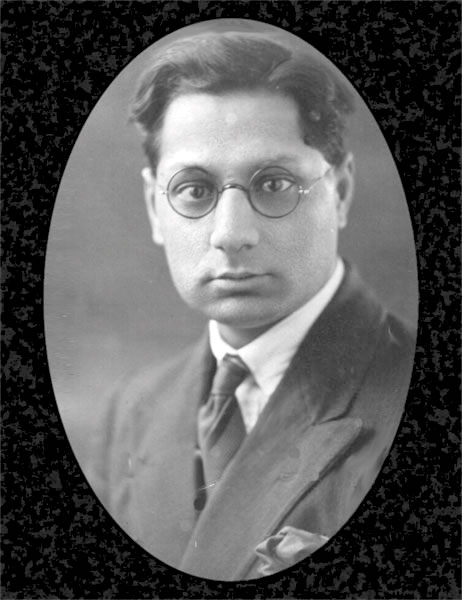
Abi: 11.04.1900 - 19.09.1963


Azhar Kidvai was born in Rampur (India) on 11th April, 1900

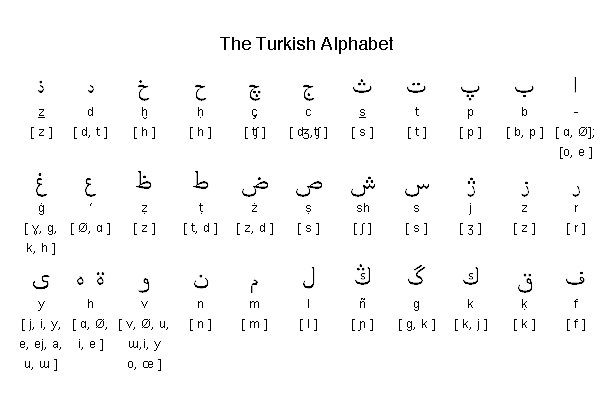
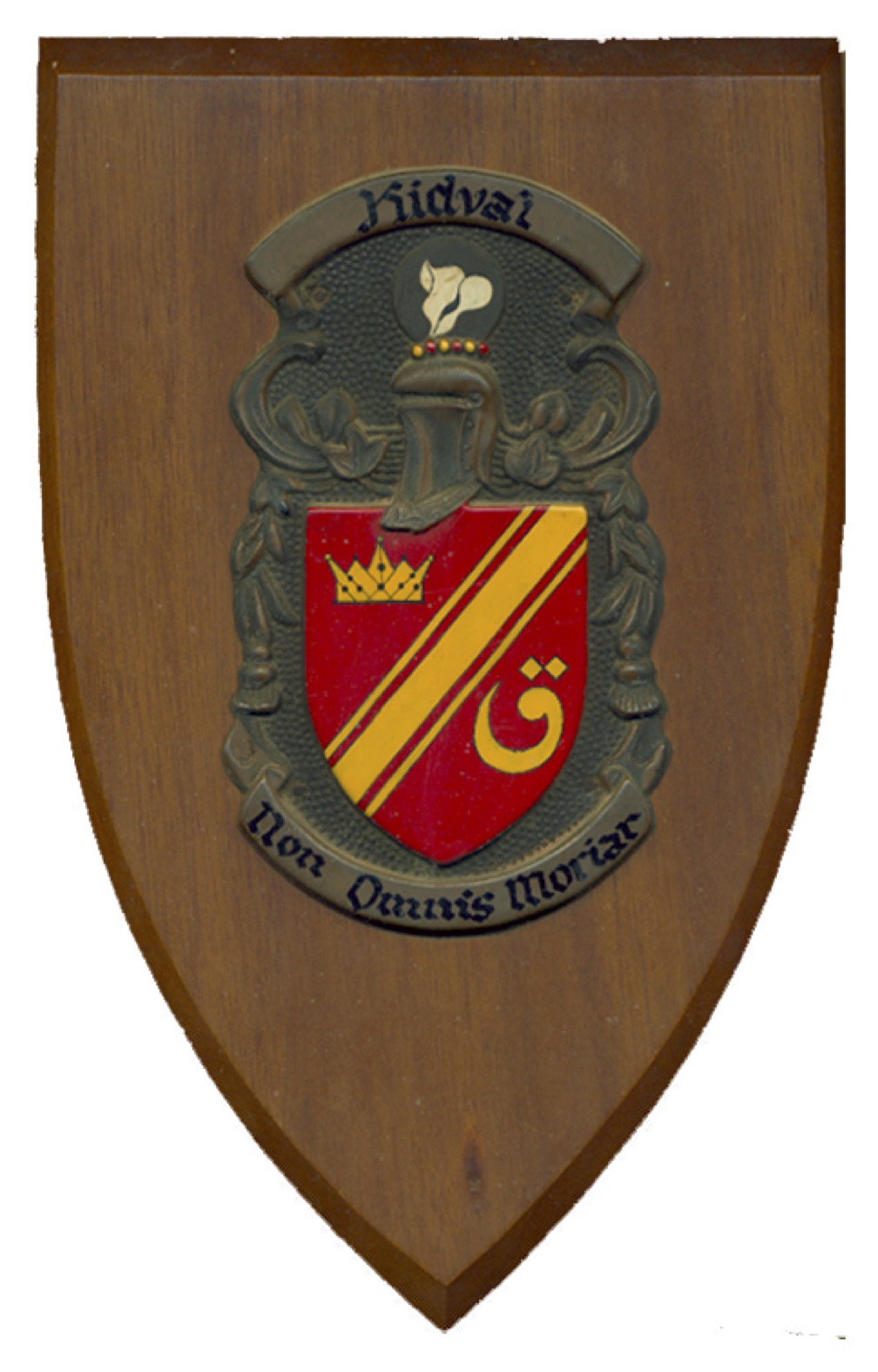
My father, Abi is what I called him, was named Azhar Ali Kidvai by his father (Safdar Ali). Abi was also named Khaaqaan Alam (many people had two names in the olden days), but he rarely used this name after he grew up … and he gave up his middle name.. In Urdu his name (ازہر قدوائ) had a ز and not ظ. Why? Think of Jaamaé Al Azhar. It means another thing when you write it with ظ. In English it was spelt with a K instead of Q. Why? Because the name is Turkish. Kidvais are descendants of Kazi Kidva who was a Turkish Judge under King Baber's rule. There is no Q for ق. There's just a K. Think of Koran. Also, و is written as V in Turkish, not W. Here is an image of their full alphabet.


The W for و was added when Hindustani Transliteration took place … earlier than Turkish Transliteration. This changed و into a W, despite the fact that the pronunciation is that of V.


A picture from a London Collection of Family Logos.
I have this in my house now in wood and brass.
The Latin translated to English means "I shall not altogether die'.

This blogpost, 52 years after his death, is to tell you of a new website that I have started putting up.It will get ready in a week or two but there are enough things there for you to see.

He went to MAO (Aligarh School and College) and did a BA in English Literature. Was arrested for his political views by the Brits ruling India. Later, he became a Doctor, was a Major in the British Forces during the Second World War. He was also a poet, a writer of stories and essays, and a great lover of classical music (Indian and Western). He sang fairly well, but only among friends. He used to do a wonderful Scottish accent, after having passed his Medicine from Edinburgh. He lived and practiced in Monifieth, a small town in Scotland.

His father, Safdar Ali, did send him there but then refused to send him money, though he had a lot of it. Abi's life there was odd, because of a lack of funds. He eventually was put into hospital where one of his kidneys had to be removed. I heard this from his friends, while he was alive. I asked him and he said he would never have told me this, because it was "between me and my father". (His father died in Dacca several years after Abi's death.)

Abi was an Atheist in his early life, but eventually became a rather strong Muslim. In his last few years one could always see him with a tasbeeeh, reciting his words of faith. He said eight prayers every day: the five Farz many do, plus Tahajjüd, Chaasht, and Ishraq. The last time he prayed was only a few minutes before his death.

Despite being a strong Muslim and reading several religious books, he also read extensively in English and Urdu — Fiction and Non-Fiction. He introduced the writers to me, just as he gave me my love of music.

A strong Congress-person, he decided that we'd stay in Delhi … but our house and his clinic were burnt down so he migrated to Pakistan on a temporary basis (in 1947). Dr. Syed Mahmud (my wife Nuzhat's naana) and Pandit Jawaharlal Nehru said to him that the troubles in Pakistan would end in 5-6 months and we'd be 'good neighbours later'. These things never happened and showed how little the Congress knew what lay ahead.

Abi died at the age of 63, after several repeated heart attacks over the years, heavy diabetes, a constant ringing in his ears, occasional faintings, and - finally - a brain haemorrhage at Anklesaria Clinic, Karachi. He seemed well as I saw him, arriving in Karachi the day before from my trip. Sadly I was on duty on the ship that night/morning and did not see him pass away.

•••••

1. Yaad Daasht

2. Links: A collection of my previous blogposts about him.

3. Stories that were written from 1928 onwards and were published as Nai Paod (نئ پود) in 1939, two years after he wrote his last playlet. The original cover and the inside page (Printed 1000 copies : Price Re 1), are also scanned and shown here.

These are followed by scans from his own handwriting.
(In some places it has not been possible to remove the paper lines.)

4. Ghazals, that were kept in a ruled booklet and named Parvaaz. 

5. Rübaais, Qit'aas, Nazms - which were filed under a small folder, called Parvaaz 2.

6. Humorous verses which Abi wrote under the takhallüs 'Shaikh Ji'. He put them in a separate collection, called Laghv Goi.

7. Tasveerayñ — a collection of some images. More will be added as I find them.

•••••

Sabeen Mahmud loved his stories that I read out to her. I also recited a few of his verses. She had one piece on her softboard in her office. She wanted me to publish his works, specially in his own writings, under T2F's planned idea of opening up a publishing unit. That never happened.

The collection is now on the Internet
where many will be able to read it.

Labels: , , , , ,

Sunday, August 23, 2015

I loved these books …

My first book is for diehard graphics fans and I wouldn't recommend this to you if you are not one. Called On The Great War, it is a 24-page long Graphic Panorama.


Who'd do this? Joe Sacco, of course. Some of you may have seen him at the Lahore Literary Festival. He is brilliant. There is an interesting piece, July 1, 1916 by Adam Hochschild and the book has annotations by Joe Sacco.

Joe Sacco has always been among my favourite cartoonists and I have most things that I could get my hands on by him. I was glad to get Bumf Vol. 1 this time. Ask T2F in Karachi or The Last Word in Lahore, if you want it … but be careful for it has nudes and sex in it. (This means that if you are under 16, you'll have to ask an older brother to get it for you!)


Here's the cover: Nixon saying he is Barack Obama
One could never ever trust him!

The essays are hilarious and so is the beautiful back cover,
called "I will make you fishers of men".


OK ... that's two books of Joe Sacco. But there was another superb one (also from T2F/TLW) by several cartoonists and graphics specialists. It's a Graphic History of Bohemians.

Obviously its called Bohemians.


I love reading about them and found this to be a great collection, taking a lot of salient features and putting them together in one book. It is co-edited by Paul Buhle who also co-edited The Beats, if you remember. I'd written about that once. Several artists drew that, too, and their gorgeous works are all over the book.

Just to remind you, here is a page from it:


I loved the beat guys and was an ardent follower in my old hippie days. I am still a hippie at heart, even now.

So go and get these … and enjoy!

Labels: , , , , , , , , , , ,

Monday, June 29, 2015

Moving backwards …

When we had a little quarrel among people in our offices, Sab, you and I would call the two persons and ask them to talk to each other, discuss the problems, and go away as friends. It always worked.

•••••

When you put up T2F you decided that everyone should talk. No violence. No gaali-galoch. No lies that harmed others. People should become friends even if they retain their views. Many of them became friends. Even the ones who disliked you, once, discussed their views with you and also became your friends.

See. It worked again. 

People came. Listened. Accepted or argued. They left, not always as friends but, at least, willing to hear the other points of view. Some even changed a small amount. 

•••••

Now you've gone.

•••••

Some people say they want to do things the way you did. And yet they are not talking, not allowing people to discuss, not being straight forward, lying, pretending to do things but actually doing something else, moving friends apart, being hypocritical - all of the things you hated.

•••••


What a pity! 


I'll miss you forever.

Labels: , , ,

Saturday, December 13, 2014

The Greatest Qavvaali Book

I have a lot of books on Qavvaali from several publishers. They are, at best, small volumes that deal with a particular Gharaanah, a group of qavvaali performers, a small collection of Farsi Poems (I am sure there are Urdu, Punjab and Saraiki versions available). None has the ability or the range that this book covers.

The title of this remarkable book, by Dr Hasan Aziz,


 is Kalaamé Aarifaañ.

Pushed through its collection and printing by his daughter Ayesha (His son, Arsalan, and wife, Ghazala, also appear in smaller letters in the dedication), this is an amazing collection of the poetry of Sufis and Mystics. Their whole family loves this genre and hold regular qavvaali sessions at their place.

It took over 10 years to write Kalaamé Aarifaañ and the book is unique that it is in Urdu and English. It features the poetry, the transliteration, the meanings in English and Urdu, and the tafheem and taffseer as related by episodes and legends of the Sufis and Mystics.

The book is recommended to be read from right to left - traditional for Eastern books, and the English version is on the same page(s).

Kalaamé Aarifaañ has, apart from a remarkable collection of the famous poems on Persian, Urdu, Farsi, Saraiki and more — plus the writings about them — a lovely glossary, a starting comment, a timeline of the people mentioned, and a remarkable wonderful history of Qavvaali. All of them are, again, in English and Urdu, as are the words of Fehmida Riaz.

The Urdu was written by Dr Hasan Aziz and extremely well translated into English by Dr Zarine Mogal. Amazing how two doctors could do all this in their very spare time. Dr Aziz's late brother-in-law did a great job in helping him with the Persian work and the late and dear friend, Imran Mir, supervised the printing and the style of the book.

Photograph by Marvi Mazhar

Pity that Imran died just a few days before the launch. We missed him greatly at Karachi when the launch was done through the courtesy of Getz Pharma's CRP on 6th December. Getz Pharma also helped publish the book.

Kalaamé Aarifaañ will also be launched at
Islamabad on Saturday (13th: Kuchh Khas - 6pm)
and Lahore (14th: Faiz Ghar - 6pm).
In both places it will be sold at a reduced price.

Printed on good quality paper, the hard cover book of almost 600 pages is in colour, with a lovely golden edge of pages, and is offered in a book-safe cover. The size is 10"x13" and the book is an absolute delight to look at.


If the remarkable book was not all, there two DVDs in it. The first one features 6 modern sufi/qavvaali pieces in video from Coke Studio … but, much more important, is the second DVD that features 48 Audio pieces of Sufi Songs and Qavvaalis. An absolute treasure that comes with a small booklet that talks about these pieces.


•

"Isn't the book expensive at Rs 15000", asked a rather rich friend. I thought of the years that went by, the love of qavvaali and Sufi music, the collection of poems, the translation, the tremendous amount of research and writing, the collection of videos and audios, the permissions to have them published here, and the finally delightful publication of the gorgeous book. But I didn't say that to him at all. I just asked him that if he and his wife took out two friends for a good dinner at a stylish restaurant (never mind the rather odd costs of the drinks at home!), they'd spend that much. And the pleasure would be gone in a day or so. The book you'd have forever … and visit it often.

Incidentally, the book will be sold
for Rs 10000 only at the launches.

•

Still not convinced if its worth buying?
Download a PDF sample of the book from here and see.

•

The book will also be available at T2F's bookstall. It will also have a website, soon, put together by PeaceNiche, where new stuff will be added to the book.


Labels: , , , , , , , , , , , ,