This blog is best viewed with the latest browser and an open mind!

Friday, April 21, 2023

India 5: An Uncanny Tale - The Epilogue

Well, not quite. Just sharing a few things.


The response to my Gupta Cha posts (Part 1 and Part 2) was overwhelming and completely bowled me over. And having them featured on ATP was fantastic, given the number of visitors who visit that remarkable site.

Then, just as Indian and Pakistani comments and emails about it began to understandably dwindle with time, the dreadful Mumbai Massacre struck. I blogged on the morning of December 2nd about it. The post got a few visits and drew one comment by the end of the day. After all, it wasn't a unique post. Millions were - once they got their eyeballs off their TV screens - reading the news, live accounts, conflicting reports, seasoned analysts, and far better blogs than mine. The sole comment had come from a Sarah Islam, who, I think was a first-time visitor to my blog. This led to an exchange in the comments section that ended on a warm note. The next morning, I received an email from her ... and the few exchanges that followed are being reproduced here - with her permission (she probably succumbed to my 'threat') - as I think her story is worth sharing and contains much food for thought.
 
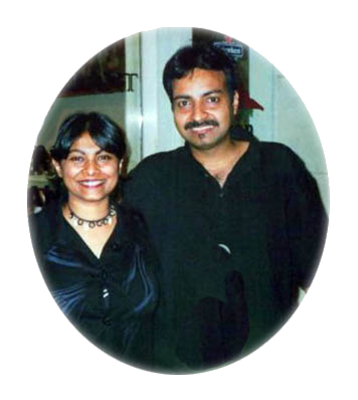
==================== Dear Mr. Kidvai I have just read your blog entry entitled 'An Uncanny Tale...' about Gupta cha. This is absolutely beautiful! Are you seriously working on your novel "Ships and Shoes and SealingWax"? Are you then looking for a publisher or have you already spoken to someone? I could help you look for one here in India. You keep saying that you are a non writer, but I assure you that your writing has really touched me. I am dying to read the rest of your story and I am sure that a couple of thousand other people would be too :) I was born in Libya in 1971 to a Punjabi mother from Lahore and a Bangladeshi father whose family had fled to Dhaka (Dacca as it was called then) from Calcutta (now Kolkata :) ). My family and I lived in Lahore in the 90's and moved back to Dacca in 1998 after the death of my father. I met my husband there and now I am happily married and live in Calcutta! So you can say that life has now come full circle for me! My husband Sukhendu and I struggled with all the prejudices that people in all the three countries live with and also certain opinions that we had been brought up with. Now I am proud to say that we have reached a peaceful stage where the blinkers have literally been taken off of our eyes :) Sukhendu and I read your story about Gupta Cha together and cried when we reached the end. Please let us know if we can help in any way for you to finish your book and publish it so other people can also read your story. Peace! Sarah ==================== Dear Sarah (and Sukhendu) I am very touched by your comments and also thank you for sharing your own past, briefly, with me. Ships and Shoes and SealingWax is not intended to be a novel - I would not even dare undertake such a venture. It is being written, mainly, in response to pressure from my daughter and my almost-adopted daughter, Sabeen (both of whom you will encounter if you go through my blog archives). The book will, in all probability, be almost blog-like: anecdotal and all over the place! Though I hope to bring some continuity into it. Do write back and tell me more about yourselves and your family. Where do you live? What do you do? Why not share stories on a blog about your own unique experiences and difficulties that you defeated to reach today's peaceful life? Peace! Zaheer ==================== Dear Mr. Kidvai I am so happy to hear back from you! We live in Lake Gardens which is beind Jodhpur Park in South Kolkata. I wonder if you know the place? My husband and I both worked in advertising, he is now creative director (art) at Ogilvy & Mather and I used to be a copywriter but am only writing freelance pieces for magazines now. We met in 1998 in Dhaka where we both worked for McCann Erickson. I had a huge chip on my shoulder as I had just returned from Pakistan and him being Indian was enough reason for me to contradict everything he said ... hahaha :-) My family had returned from Libya in 1989 and decided to settle down in Dhaka. But after a few years, my mother packed off my brother Amber to Aitchison College in Lahore and my sister Reema and I to Lahore. So that is how we landed up in Pakistan. My parents joined us for a while but for most of the time, my sister and I lived with my nani amma on Nisbet Road. After we got married in 2004, my mother was very unhappy with my decision as she had seen the carnage in Amritsar and, later on, on the train to Lahore. She was only 6 at the time but she can recall certain events very clearly. I can understand that, as the events must have been pretty horrible and must have been burnt on her brain. She met my father Dr. Nurul Islam in Benghazi (Libya) and their marriage in 1970, too, was quite controversial as there was talk of East Pakistan asking for independence from West Pakistan. Anyway, I was brought up in a house where both cultures, Punjabi and Bengali, were very much in evidence and I was very happy as a child and most of my time was spent chasing after butterflies, making mud pies and reading from the ancient books that my grandfather had left us and the newer books that we bought every now and then. My mother was adamant that we should learn Urdu as she is of the opinion that having Urdu as our first language would help us speak beautifully and articulately. She was and still is a stickler for the right pronunciation:-) So we went to the Pak Libya School that was run by the Pakistani Embassy in Benghazi. For nurturing our Bengali heritage we were dutifully packed off for singing, dancing and Bangla lessons at Hafiz uncle's house. So at school we spoke in Pidgin Italian, a bit of Arabic and Punjabi/Urdu, at home we spoke in Urdu and English and Bengali for some of our guests and in front of my father (especially when he was cross) :-) I was brought up in a liberal household but after my father's death in 1998, my mother suddenly discovered her Pakhtun roots (my grandfather had settled in Lahore but was originally from Swat) and started attending Quran classes and sympathizing with the radical Islamization of Bangladesh. This was a shock for me and I rebelled. Over the years my distance from my mother and her views became considerable. Now we are talking again and things are getting better :-) In the beginning, I would get very defensive with Sukhendu whenever something like the BJP used to come up in conversations but then I was reminded of a story that I think has largely shaped my thinking. At school I learnt from textbooks that one Rashid Minhas was the recipient of the Nishaan-e-Haider and a brave and valiant soldier who had grappled with the Bengali flight Instructor, Flight Lietenant Matiur Rahman who was a traitor. I grew up hero worshipping Minhas. When I came back to Bangladesh, I was shocked to learn that for the Bengalis it was Matiur Rahman who was the hero and not Rashid Minhas, who they considered the enemy. I realized then that the history of India, Pakistan and Bangladesh is so intertwined and so full of passion and extraordinary circumstances that it is impossible to take sides. Both men as I see it today were heroes and valiant soldiers who just happened to be on opposite sides of the cause. It was an accident of birth. This realization has, on one side, liberated me and, on the other side, saddened me beyond imagination. This means that we will always be at each other's throats and no one will see the person but only the flag that he is wrapped in. Of course I am exagerating, but I am telling my story fully for the first time. I think you will understand the confusing identities that I live with and also that there will always be people who will rise above pettiness :-) Thanks for listening to me. God bless! Sarah ==================== Dear Sarah Wow! And you want me to write [down] my stories? Blog this just the way you've written it to me. At the moment it's a request but can be used as threat by saying I'll publish it on my blog ;-) It's real tales such as yours that will ensure that the only things we all really need to burn is not each other's flags but our own if peace is what we want. All the best. Zaheer PS: I hope you won't be offended at my saying this, but as an anti-nationalist, I would not accept that both RM & MR were heroes. They were just simpletons, brain-washed into committing such acts. But that, of course, pre-supposes that the story, itself, is true. There are some in the Air Force[s] who have, since, cast doubts on the veracity of the entire tale and think it was a crash that the PR-minded in Pakistan decided to use to advantage and the BD people, naturally, made the best of it. Who knows. So it goes ... ====================
I just LOVE the technology that has made all this possible, so here's to Doug Englebart, Alan Kay, the two Steves, Bill (huh? who he?), Tim-Berners-Lee, and hosts of others. May the FSM bless you all. Oh, and Sarah now has a blog :-)

Labels: , , , , , ,

India 4: An uncanny tale ... (Part 2 — The Conclusion)

When you have had the benefit of a 25-year stint at sea (1959-1984), there is bound to be much that is narratable and shareable, with some of it even of interest to a few people outside your immediate family. But this post is, primarily, about Gupta Cha (and his family) - so I shall make only brief references to the other parts which will be covered in greater detail in "Ships and Shoes and Sealing Wax" (if that "book+" ever gets completed). However, as indicated at the end of my previous post, the real conclusion to the tale - which took place last year - will make up the second half of this post. The first will be spent breezing through the intervening years.


Ok, so it's 1947, the last day of September. Abi has finally received permission to extend his leave and proceed with the family to Karachi. We are to set sail on the S.S. DUMRA (of the British India Steam Navigation Co.) and are standing on a pier. There's a mad rush wherever one casts an eye. If I had known of the concept then, I would probably have thought of Maedaané Hashr. The sounds of bawling from families being separated can be heard mingling with the shrill laughter of children running everywhere, excited by the journey.

The 5 of us soon board the ship, bidding goodbye to Gupta Cha and to Badshah Chacha, who has travelled from South India to see us off. Standing with them is a close friend of my father, the amazing Dr. Baliga (one of my 'ideals' when I was a teenager), who was once invited to Pakistan to treat our Governor General, Ghulam Mohammad. A couple of Sikh hockey players from the Bombay Sea Customs, 'fans' of Abbu Jan, have arrived to say goodbye to their Hockey Hero, but now seem more interested in Chacha Jania (Talat Mahmood) whom they have cornered. As usual, he is too shy and polite to get away from them, though he wants to join us for parting hugs. The very moment that we start up the gangway, he runs towards us and the Sikhs shout out to all, "Yeh Talat Mahmood bhaaga jaa rahaa hae Pakistan. Roko. Roko." The laughs lighten the sad moment. \
We are shown to a cabin which, though meant for 2+1, is spacious enough and the bistarband comes in handy. Soon, the ship's ropes are cast off and we move gently away from the pier. The air is suddenly filled with wave after wave of loud roars of Pakistan Zindabad and Quaid-e-Azam Zindabad. One can feel not just the passion but the freedom in those naaraas, suppressed at the pier where everyone realized that such slogans could incite riots. Once Bombay harbour begins to fade out of sight, Abi contacts the officer who is doing the rounds to inform him that he is a doctor and available for any emergency help that the ship's team might need. An hour or so later, he is called up by the captain and, with two other doctors and a couple of nurses also travelling as passengers. They are introduced to the Ship's Medical Officer and agree to do frequent rounds and assist with any passengers needing help.

At some late hour we are woken up by Abi to meet - and accommodate, if possible - a couple trying to find a comfortable place to rest. He has found them on his very first round. The bearded husband is none other than poet Bahzaad Lakhnavi. Some of you may be familiar with Begum Akhtar's rendition of his "Deevaana Banaana Hae To ..." Once a rangeen shaaer, Bahzaad Chacha later turned into a very prolific naat go, and now lies buried in Karachi with signs on the graveyard proclaiming his ishqé rasool. His unique tarannum was extremely popular with müshaerah audiences. The next 3 days of the journey are spent with him and Abi reciting ghazals to each other with a slowly increasing 'fan club' blocking the passageways. The day before arrival in Karachi is my 7th birthday. Bahzaad Chacha gives me a shayr as gift. The original, in his hand, has long been lost ... but I still remember the words:
Tüm ko tohfay mayñ aur kyaa dayñ ham?
Lo nayaa mülk ... Iss mayñ phoolo phalo!
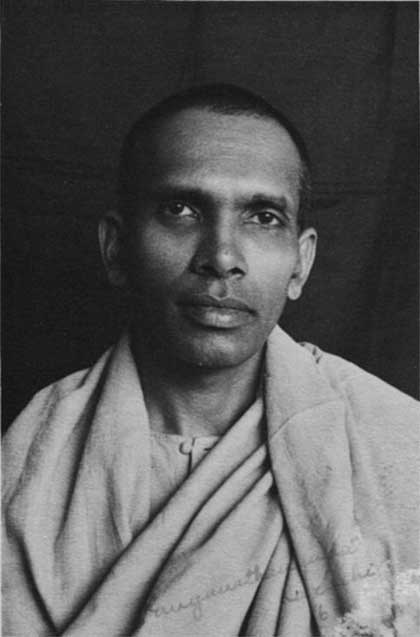
Abbu Jan gets a small temporary house somewhere near Jackson Bazaar in Keamari and, later, moves into the large Customs Flats nearby. We live with them for a few weeks while Abi - almost penniless - does the rounds in Karachi in the hope of finding a suitable job in some hospital. He does not wish to re-join the Army and has applied for release. One day, quite by chance, Abi bumps into Swami Ji (as we always addressed him). He recognizes Abi as one of his fellow students at medical college. Abi learns that Swami Ji and two other colleagues run a charitable hospital - with free treatment for Hindus - under the Ramakrishna Mission. They are on the verge of leaving for India, after handing over the place to GoP (as evacuee property, I guess). The stock of medicines, good for about a year, is to be thrown out since transferring them to other hospitals is considered a major task of logistics and accounting. Abi is apalled. He says he would like to continue running the hospital, without charging the Mission, until all the medicines run out. He promises to keep it free for Hindus if the Mission agrees that the free treatment could also be extended to Muslim refugees who cannot afford to pay. They agree, but there is the Government to convince. Abi's old Aligarian friend, Mr A. T. Naqvi, now the Commissioner of Karachi, arranges for this to be formalized and, suddenly, Abi has a job which, though it carries no salary, comes - to our delightful surprise - with a small 2 room apartment on Nazareth Road (half-way between Guru Mandir and Soldier's Bazaar). We live next to the larger apartment occupied by Swami Ji and his colleagues. I am in and out of their house all day, devouring all the Idlees and Dossas and Rasm they can feed me - which explains my desire to dart off to the South Indian Sagar restaurant the moment I get to Dilli. (If you ever go there, be sure to try their almost-3-foot-long Paper Dossa.)
Diversion The Nazareth Road house is purchased the following year by a Nawab Hasan Yar Jang (nephew of the colourful Nizam of Hyderabad) and Swami Ji manages to have it written into the agreement that as long as Abi is alive he can continue to stay in that apartment, paying rent - of course. The Swamis leave in a few months. Nawab Sahab - always very civil when we encounter him in the building - shifts in with his 'lingerers on'. He gives me my favourite mithai - genuine Baadaam Ki Lauz - whenever he receives a package of it from Hyderabad. I even get to go with him and (What a treat!) sit in the Royal Stall to attend the Platinum Jubilee of Aga Khan III (grandfather of the present one), a ceremony Nawab Sahab is attending on behalf of the Nizam. But Nawab Sahab is a stickler for words. The contract says that my father can occupy the house as long as he lives. On 18th September 1963 my ship happens to arrive in Karachi. On the 19th my father dies. (Abbu Jan and Ammi Jan are getting a house built in Iqbal Town and are temporarily staying with us, which offers Ummi and me a bit of solace, since we have all been very close, always.) The Nawab attends the funeral, comes into the house to condole with my mother, and informs me on his way out that we have to vacate the house in 48 hours! Which is what I try to do, but it takes a bit longer and needs the good offices of neighbour, ex-Mayor Khan Bahadur Gabol Sahab, to convince the Nawab. I sail away two days after our hurried shifting. This trip to Karachi has been a life-changing experience for someone only 23 years old. But let me get back on track.
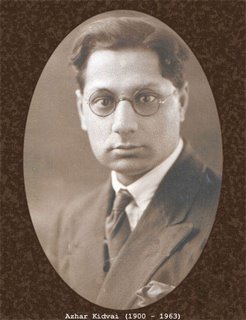
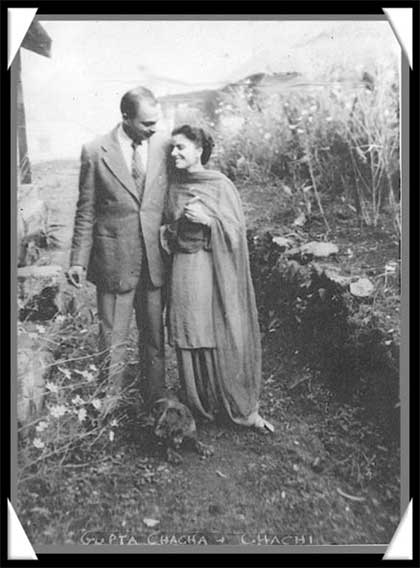
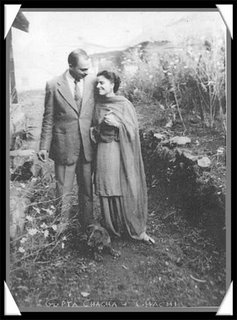
Gupta Cha is in touch by mail and we receive a picture of him and Chachi soon after their wedding in 1949 or 1950. This exchange continues, off and on. When Abi dies, Ummi receives a very warm letter from them, asking "Bhabiji" to stay with them in Dilli for a while. But the trip never materializes. We couldn't afford it. Then, for some reason - possibly mail going astray after the 1965 war - we all lose touch. For years I search for him ... but can recall neither his rank nor anything else. Whenever my ship is at an Indian port, I try to think up ways to find Gupta Cha. Trying to find a 'Gupta' in the Indian army, I am told, is just short of tracing the right 'Khan' in Afghanistan.
Zoom ahead to 1983: I am in command of a ship operated by the Gokals out of Hong Kong. The officers and crew of these ships are multinational and on my ship the Chief Engineer, Vipin Kaura, is from India. Vipin's father - a retired Army officer - comes from Dilli to visit our ship and stays there for a few days.
Soon after 'Uncle Kaura' arrives, I decide to go wish him. I plan to remember to say Aadaab in the old tradition but my Pakistani Radio Officer - a Lahori - tells me that that was not as common a greeting in Punjab as in Delhi and the U.P., so maybe I should say Namsté to be polite. I walk in and say that, a bit awkwardly, failing badly at the hand coordination for the accompanying gesture. Uncle Kaura - originally from Rawalpindi - says. "Aray ... hum to soach rahay thay keh bohat din baad Salaam Alaeküm sünnay ko milay ga ..." and soon the talk turns to his homesickness and losing touch with old friends. He regrets forgetting to write Urdu well.
During the stay I recount 'our' partition story and he asks me if there is anything I can recall about Gupta Cha that could help trace him. Apart from his first name, Birjesh, I usually can't recall anything. But from some hidden corner of my mind, that day, I bring forth two facts that I'd never consciously recalled earlier. Someone in Gupta Cha's family - possibly his father? - was a Judge. And they lived in a house called Bürj Mahal in Meerut. Before he leaves the ship and heads home, Uncle Kaura says he will ask some old colleagues about Gupta Cha but doubts if anything will come of it. Five days later, I am standing at the Shipping Agency office when I am handed an envelope posted from Delhi, addressed to me. I open it and discover a letter in Urdu in a shaky hand. It starts "Pyaaray Baytay ...". "How sweet of Uncle Kaura," I think to myself, "to try and write in Urdu after all these years." But the next para that I read (writing this I am still feeling the same sensation as I did then) is something I cannot believe. I jump ahead and look at the bottom of the next page. YESSSSS! It says "Tümhaara Gupta Cha". It takes me an interminable amount of time to absorb this. A clerk comes up and asks if I am OK. I have tears streaming down my cheeks and can barely speak as I read about Gupta Cha thinking each year of me on my birthday, admittedly not difficult to remember in India (It's Gandhi Ji's, too!). I read and re-read the letter. He wants me to fly out to Delhi. Of course I cannot (not just because of the visa but because we sail out in 2 days).
It turns out that Uncle Kaura, immediately on his return to Delhi, took a bus to Meerut and spent the day searching for Bürj Mahal. Unsuccesful at his attempt, he stopped at a shop in a multistory building to have a cold drink before taking the bus back. The shopkeeper and he got into a conversation and he mentioned his search for Bürj Mahal. "This very building is where it used to be," said the shopkeeper, "and the old owners live right on top, I think." So up climbed Uncle Kaura and met Gupta Cha's sister-in-law and told her the tale. She recalled our family and informed Uncle Kaura that Gupta Cha lived in Delhi! Defence Colony!! One lane behind Uncle Kaura's house!!! (Yes, Woody Allen. Life does imitate bad television!). So it is to Uncle Kaura that I owe more than I had realized.
After I regain control of my senses (and I am not dramatizing this ... it did take a while, as 36 years and all that's happened in that period ran through my mind) I immediately decide to phone him. And Ummi. Getting connected to Karachi, oddly, happens very quickly but I just manage to tell her that I've found Gupta Cha when, even more quickly, the line drops and we cannot get through again. Getting through to Delhi is a 'trunk call' - as calls between cities were then known - and requires a 'booking'. "It's about a 3-4 hour wait," says the operator. The manager of the agency, who, like everyone else in that room, has heard bits of my story by then, takes the phone from me and says something in Marathi, and then translates it for me. "Maeñ saalay ko bola 'Yeh jaldi type ka call hae! Death and Illness Emergency'. Abhee das minat mayñ mil jaae ga." Of course I can't recall the conversation with Gupta Cha. Too full of both of us trying to fill the other in about everyone and everything. Sobs. Laughter. He tells me he has two children. The son, nicknamed 'T2' is in the army. His daughter, Nanu, is married to Sunil who is in the Navy and is posted in Bombay. I am excited. "Can I see her?" Gupta Cha gives me the address of her house in the Naval Colony and, still reeling from all this, I am put on a rickshaw by the friendly clerk who first tells the driver my story and then instructs him to wait wherever I am going and bring me back later and collect the money from the office as part of the celebrations for my joy. Awwwww.

So off I go. Kinda stupidly quick response, if I'd just thought a bit. I can't even get into the Naval Colony in my own city without some identity papers. And, as a Ship Captain from Pakistan, I should not even be near an Indian Navy area. But who was thinking? In retrospect, I often shudder. Had I been arrested and charged with a Pak spy masquerading as an Indian, I'd still be in jail there, if alive. But I was not pretending about anything. I was excited and that's all that must have shown on my face. No nervousness at all. Just a stupid pasted smile of the kind that airline staff bear. The clothes, too, helped. I was in a white khaddar kurta pyjama - my usual dress code for the evenings - a common sight in Bombay, anyway. The chatty rickshaw vaala, who informed me that he was a Muslim and had relatives in Karachi, spoke to the guard when he asked where we were headed. "Aray chho∂o yaar ... 30 saal baad behen say milnay jaa rahaa hae sahab!" And we were in.
Later, I have laughed often at the thought that the Indian Naval Security services are at the same level as ours - recalling that in the 60s, when we docked in Karachi with ammunition that our ship had brought in from Iran, the whole port area was under security and passes were required to board the craft. Not even our own officers could step onto the quay and board the ship again without passes. Sitting in my room, I nearly leapt out of my chair as I saw an old friend from India walk in. "How the eff did you get on board? It's bloody tight security!" ... Bhagwan Das winked and said, "Full Paanch rupyah diya gate vaalay ko, yaar!" 

The meeting with Sunil and Nanu was great. It was like being at home with people I'd always known. No takallüf. They already knew of me. Their elder daughter, Ayeshah, (named by Gupta Cha) fell asleep soon but I did get to carry around the new addition, 4-month old Amrita, after eating a lovely home-cooked meal, so that Nanu could eat in peace. I wish the ship would have stayed longer so I'd have got to spend more time with them. For a year or so Nanu and I managed to stay in occasional contact, but Sunil was then posted to Vishikhapatnam, I think, and none my letters ever reached them, so we lost touch.

Gupta Cha and I wrote to each other often and I phoned him from several ports - Hong Kong, Singapore, from wherever I could dial direct. He and Ummi, too, exchanged a few letters (in Urdu!). He was insistent that I hop across the border and stay with him for a few days. "I have a room reserved for you", he'd always tell me. But visas were an impossibility for me then. I returned to Karachi in late March 1986 and Ummi told me that Gupta Cha had passed away just a couple of days earlier. Fate's cruel joke... to have found him after years and never met him! I spoke to Chachi on the phone. There was less to say except in silence. Some time later, I received a call from "T2", whom I had not been in any kind of contact with. His addressing me as "Bhaisaahab" seemed so strange. He told me they were letting go of the house and he was taking Chachi along to wherever he was posted then. Chachi came on the line - and in one of the most touching moments for me in this strange saga - asked me if it would be possible, before they left the house, to come and stay a day or two in the room that Gupta Cha had earmarked for me. I tried but I could not get the NOC needed for a visa. (Although I had left the sea - swallowing the anchor soon after my daughter's birth … and Ummi's accident that confined her to a wheelchair … and started a company of my own, my passport still showed Merchant Seaman as my profession, so our Ministry had to issue NOCs.) I never managed to contact T2 and Nanu again. Uncle Kaura, too, passed away before I could find out the address from where, maybe, I could get a forwarding address they'd left behind.
On my next trip to Delhi, much later, I told Vipin about trying to find T2 and, together, we called up several Guptas, none of whom could help. I discussed with Tarun (of Tehelka) the possibility of an ad in his paper looking for these people but we never got around to it.

Fast Forward: It's late 2007. I am sitting at T2F in Karachi and get a call from a Pakistani Merchant Ship Captain, some years junior to me. We don't really know each other. He is writing a book about our Merchant Navy and wants any photos that I may have which could be used. Then he says, "I was in Bombay last week at a meeting and there was someone who wanted to get in touch with you. I promised to trace your numbers and send them to him." I imagine it's one of my many Indian fellow seafarers from the NOL (Singapore) or GESL (Hong Kong) days. But it turns out that it's someone from the Indian Navy. "SUNIL?" I almost shout the question. "Yes." It's just too crazy! I get Sunil's number and call him up. Later, I speak with Nanu. I learn that Chachi is no more. None of us ever got to meet her :-( Then I get a Delhi number and call T2, whom I'd searched for as a Major? Colonel? Something Gupta. In all the years I was in contact with the Gupta family, no one had ever mentioned T2's full name! Turns out he is Pradeep Kumar. Chalo. And he's been living in Delhi for a few years (during many of which I've been visiting the place often, even for long periods). Much as I wanted to, I could not attend T2's son (and my fellow Merchant Navy Officer) Abhimanyu's wedding in Jaipur, where Ashmita's family live. Just a few days earlier that city had suffered from bomb blasts (obviously, the blame was laid at our doorstep, as is customary) so getting a visa to that city was out of the question. 
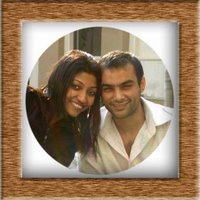
Things are getting better. T2 met our daughter in Dhaka during his business trip. I met him and his wife, Ruby, when I stopped over in Delhi en route to Kolkota for a meeting. Sunil flew over from Mumbai and we had dinner together. Nanu, I hope, will be able to come to Delhi the next time I am there (hopefully in the last week of the next month). And I am dying to see the kids all grown up.
 
If ever there could be a suitable postscript to all this, it's this email I received just a while ago. Peace!

Labels: , , , , , ,

The 'Other' Heresies

Mexican photographer Pedro Meyer is as renowned for his powerful and provocative photographs as he is for his pioneering work with digital imaging. Meyer’s photographs consistently test the limits of truth, fiction and reality. With the advent of digital photography in the early 1990s, Meyer evolved from a documentary photographer who created so-called “straight photographs” into a digital-documentarian who often combines photographic elements from disparate times and places to arrive at a different or higher truth. Pedro's oft-expressed contention that all photographs — digitally manipulated or not — are equally “true” and “untrue” has been labeled “heretical” in the orthodox documentary photography community.


While fellow Apple-user Pedro Meyer (one of the first to adopt this platform and launch the very first intearactive CD-ROM!) may have his exhibition - Heresies - opening in 60 museums in almost as many countries (we are thrilled that T2F, where the exhibition opens on 21st October, has been selected as the Pakistani venue).

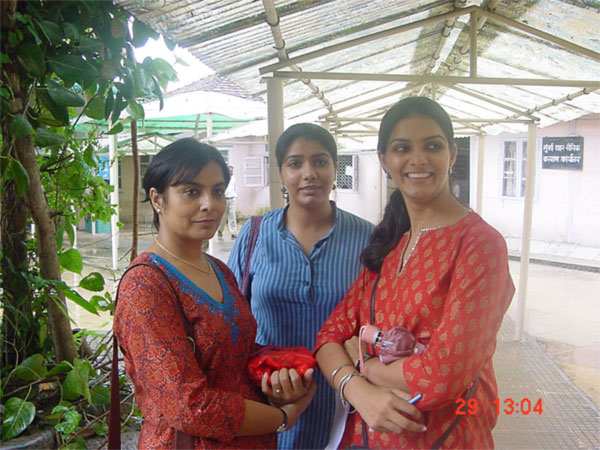
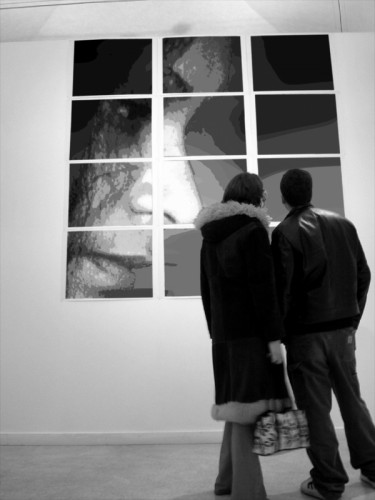
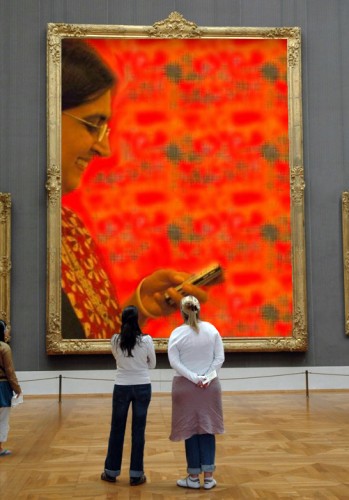
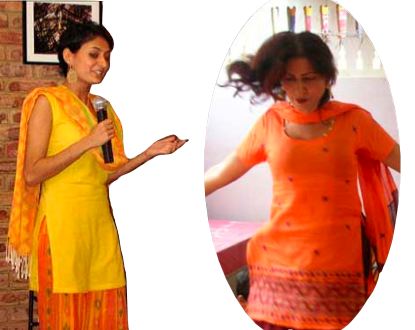
There are others, like me :), whose photographs have also made it to some of the greatest (virtual!) halls in the world. Here are just 2 of my examples.

"Happy viewing", as the Senator said!
;-)

Nuzhat

Sabeen

See you at the real Heresies, where a selection of large original museum quality prints of Pedro's works will be displayed and changed almost weekly!

Please do keep checking out the schedule at T2F's website for the exciting related events, like workshops, talks, discussions, and presentations during the weeks that this unique exhibition is on, unless you're on FB and already visit T2F Pages for updates.

Oh ... did you know that you can also subscribe to T2F's Events RSS Feed so you get the news automatically? And, as the icing on the cake, sign up for SMS alerts and get timely reminders too. This saves you the task of 'remembering to remember' to go to the website and saves me answering calls - usually when an event is actually happening - Maddy, please note ;-) - about when and what time it's happening.

Labels: , , , , , , , , , , ,

A great leap forward

When my daughter screened her very first short film (Bindiya Chamkay Gee) - during one of T2F's Cinema for Change sessions - the star of the documentary was also the star of the evening, answering questions and countering comments (some rather accusatory) with a confidence that many had not expected. But then they had never met a Hij∂a like Bindiya!


  Among the post-event post-Q&A discussions that followed within small groups (and the place was buzzing) there was one recurring thought: Given the scale, number, and variety of problems developing countries face, it was a wild fantasy for Bindiya or her supporters to imagine that the difficulties encountered by such a small subset of the population would even be on the radar of the governments of any of the countries in the majority world (to use Shahidul Alam's term of choice). Some felt that the vote-bank was not large enough for any politician to try and woo. Others, that any decent politician (yes, it is possible, though admittedly rare) who truly wished to support such a cause would be mocked so much that he would lose his general credibility.

It was a joy, then, to see this news item from our 'neighbouring country' (a euphemism that our state media uses for India, lest the invocation of the actual name result in that evil genie materialising and devouring us).
DISCRIMINATED AGAINST and forced to live in secluded communities, India’s hijras have always had to fight for basic entitlements. Two weeks ago, however, a major victory was achieved when Tamil Nadu added a third gender to ration cards. Hijras may now enter a ‘T’ (for transgender) in place of a ‘M’ or ‘F’ on ration cards. The move makes Tamil Nadu the first Indian state to officially recognise its hijra citizens.
Incidentally, the article is by Morgan Harrington, who was at Hampshire College with our daughter. Read the whole story

Labels: , , , , , , ,

The post I wish I hadn't had to write

Being in Dhaka for an FK Partnership meeting provided me with a chance to spend time with my lovable daughter, now at her first job (at Drik) after graduation. Except for the two meeting days, for which I moved into the hotel where the event was held, I am living in a room next to her, provided to me courtesy Pathshala. The post I'd planned to write was going to be gossipy and funny ... but that will have to wait, now. For almost 4 days I have watched our beti bravely handle the suspense of her college friend, Dora Magrath, missing from her home. Dora and she had lived in the same house at Hampshire College and were good friends.


My daughter kept logging on to all the sites that could possibly provide any updates ... but little was heard. I watched Dora's YouTube videos - especially the one of her singing Amazing Grace - marveling at her wonderful voice and adoring her sweet smile. My heart went out to Linda, Dora's mom about whom our daughter had spoken to us. I spoke to Nuzhat about Dora and we both hoped and prayed that Dora would be home, safe and sound, soon. Tonight we returned after dinner and, exhausted, My daughter fell asleep in my room. I wrote the post about Pakistan's YouTube fiasco and then searched on the Net for Dora again. No news. Five days! The car she was in hadn't been found. That gave us hope and, as many felt, reduced the chances of foul play. I read and re-read Dora's words on her MySpace page:
I do not want to be a product. I do not want to sell my pretty face to sell a record. I want to play my music, to be a constant student, to live my life the way I want. And if that means that I need to have a day job, and maybe a high-paying night job a couple nights a week, then so be it. I’m tired of seeing every musician turn themselves into a product, into something smooth and glossy that everyone will automatically “love.” I don’t want to smooth out the rough edges, I don’t want to make myself into something or some one that moves with the tide. I want to own one wave, own the bubbles and the rough edges and the swooshing of that one wave and know that I move with it, move like it, because I wish, not because I can gain the whole ocean from it.
I found a CD of hers on a website. Downloadable ... but through PayPal, a sevice not accessible from here. Among her musical influences, she'd cited my favourite jazz singer of all time: Billie Holiday. Yes, I thought. Dora would ... Once again I logged on to Steve Huff's Dora Magrath page for updates, more links, and another run of the Amazing Grace video, which I downloaded to play for our beti when she wakes up. At midnite, just as I was considering going to sleep, our daughter woke up. She logged on to search again, without luck. After all, I'd searched only moments ago. And, quite suddenly, there it was: Dora was dead! Dead! An awfully difficult word to speak or write about a 22-year-old. A little kid about whom, only a couple of days ago, I had read this:
Dora Magrath has a superpower. No, she can’t shoot deathrays from her eyes or lead North Korea. She has the ability of making everything disappear around you when she starts singing. This singer-songwriter sounds like a Regina Spektor fed with jazz records. Her amazing voice barely covered by a shy piano just gives me shivers.
It was good that I was with my daughter ... although I am sure I could offer her no real consolation. But loneliness would have made it much worse for her, I guess. It's been over 2 hours since we read the news of Dora's death. While I sit and write this, she is visiting all her old web spaces and talking to friends and reliving those wonderful days and memories of Dora. My mind goes back to the loss of a friend, through suicide, when I was just 16 ... and I realize how inexplicable and confusing life must seem to my daughter. Dora, I wish I had met you in person. Yet, strangely, you now seem much more than just a collection of photographs and videos and a beautiful voice to me. R.I.P., child!

Finally, here's Dora ... in her own words. ===================== Update March 3, 2008: I am leaving Dhaka today, for home. Being with my daughter - free of most interferences - has been an experience quite different from what I had imagined. Over the last few days, despite the fact that at my age I have had to deal with many deaths before, I am trying to come to terms - not just with Dora's death but the inexplicable closeness I feel with her. The more I read about her at various websites and obituaries, the more I hear about her from my beti and from Dora's friends, the more I realize how special this very wonderful person was IS! My daughter and her friends have put together a website featuring posts and reminiscences by friends and family as well as links to other sites and blogs that mention Dora. Read her mother's letter and you will be truly inspired by this amazing 22-year-old who has taught me much in this short space of a week.

Labels: ,

Saturday, April 24, 2021


(Sabeen Mahmud's Poem)

i am tired.

tired of running

tired of the struggle

tired of arguing

tired of explaining

tired of the machinations of the rich

tired of the mumbo jumbo

tired of the greedy

tired of the bored

tired of the dumb

tired of the petty

tired of waiting for another day

tired of being polite

tired of corporate crime

tired of generals

tired of taxes

tired of banks

tired of coping

tired of the silence

tired of the battles

tired of the smug

tired of the manipulators

tired of being tired

tired of life

stop the world. i want to get off.


Here is my poem on her

Transliterations by Saif Mahmood

English Version by Sophia Pandeya


Labels: , , , , , , , , , ,

Monday, May 25, 2020

My Nānihāl … 3

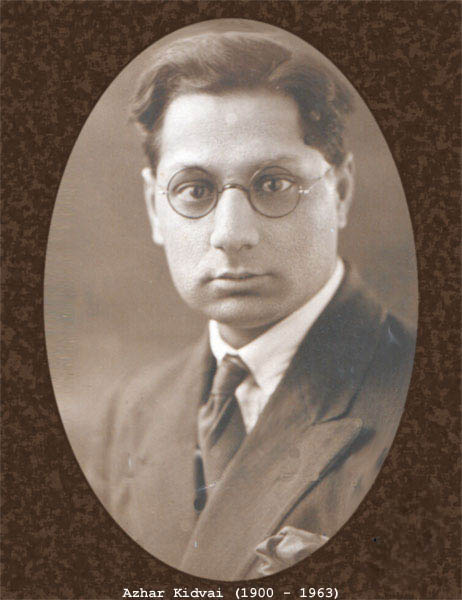
As I had written earlier (and am repeating it again in this post) Nana Jan's and Nani Jan's children were: Shamim (died young) -  Vasim, Married to Asad Ali Qidwai (No children) - Kishwar. Married to Azhar Kidvai (they had Kehkeshan died as an infant, and Me) - Syed Arif. Married to Safiya. (No children) - Syed Asaf.  Married to Sarwar (Amir, Khalid, Nuzhat, Tariq, Belal, Shariq).


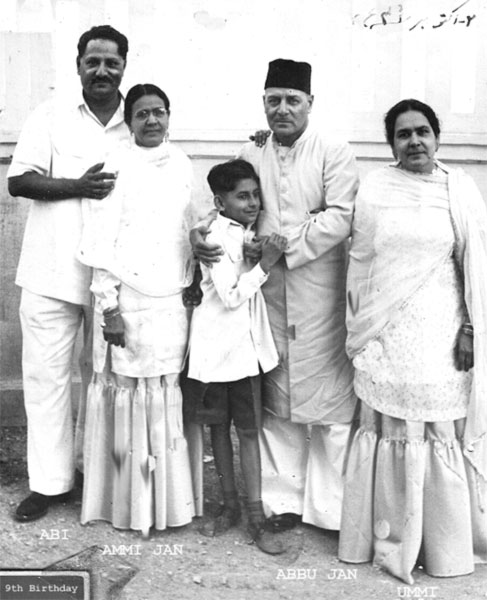
Abi, Ammi Jan (my Khāla), Me, Abbu Jan (my Khālü), Ummi

My parents and my khāla/khālu have been mentioned several times in this blog as well as in my other blogposts in Koee Mayray Dil Say Poochay so you can look at those posts there.

Arif & Safiya (Mamooñ Sahab & Mammi Jan)
Sarwar & Asaf (Jan Mammi & Mamooñ Jan)

Mamooñ Sahab was my favourite Mamooñ probably because I had always seen him even after coming to Pakistan when he'd visit us or I would, occasionally, go to his house after school. He was a classmate of Syed Mohammad Jafri and Shaukat Thanvi and often came to our house with Jafri Sahab whose poems I always loved.

Mamooñ Jan lived in India so I was not in touch until he finally shifted to Pakistan a year after Mamooñ Sahab died (on 19th March 1955). That was the day when Aqeel (Kirmani) Bhai (son of Shahabuddin Kirmani) was to get married … but the wedding had to be postponed. My father took Mamooñ Sahab to the military hospital and was asked (strangely) to sign the death certificate as a Doctor because the doctors there refused to sign it. This has been a source of worry to me, always.

Mamooñ Jan came here after his elder brother died and Ammi Jan (mainly) insisted that he come here. So he arrived here in 1956 and lived here. Mammi Jan always remembered India and they all used to travel to Delhi where her family was … until perhaps it was no longer possible.

Amir, Khalid, Tariq, Shariq, Nuzhat, Belal

Amir married Nuzhat (aka Nukki and was always called that because Amir's sister - my wife - had the same name). His children are Ali bin Amir and Ayesha binté Amir.

Khalid married his cousin, Sajeda, She left for India fairly soon after Khalid's death. No children.


Our Wedding

Nuzhat and I got married on May 8th 1970 … and had a really quiet 50th Wedding Anniversary this year, thanks to COVID-19 :) Maybe we'll have a party some day if this problem ever goes away.

Shariq, Mufti Sahab (Me!), Tariq, Belal, Amir, Khalid
Nuzhat, Mamooñ Jan, Jan Mammi, Ali bin Amir, Nuzhat Amir, Sajeda Khalid

Here is our whole group. Because I had long hair, Ghulam Farid Sabri - the elder brother of our wonderful Qavvāls, the Sabri Brothers group - always called me Sufi Sahab.

Khalid who died early - Missed by all of us!
Khalid died on December 10th, 1977

He was in and out of the hospital several times with a constant pain in his head. His Brain Biopsy (the piece had to be sent to UK to test) had said he had a Tumor that was not touching his Brain. There was no reason to worry. Medication would put him right.

Dr. Juma, a brilliant Brain Surgeon, was his Doctor, initially. He had soon left JPMC and was replaced by Dr Bhatti, who didn't agree to the Brain Biopsy result and decided that he was going to operate.

Dr Juma came back and visited his old patients. I was there and Khalid spoke to him. Dr. Juma said to me that there was no need for an operation at all and he would talk to Dr. Bhatti.

Two days later, while I was bathing at Mamooñ Jan's home, Shariq came and said Khalid was very ill and we should get there. The rest of the family was already there. Nuzhat and I left with Shariq.

I jumped over the wall at JPMC and entered his room. I was told that his feet were turning blue. I looked around. There was Dr. Bhatti, a couple of nurses, and two assistants there. I noticed that the breathing tube that was going into Khalid's mouth had a doctor's foot covering it. I shouted and said this ... but no one listened. I was then told a few minutes later that Khalid had passed away.

The next morning Dr. Juma phoned up and said that Khalid had been killed but we should not go to court as they will go through this several times and Khalid's parents will have to listen to all this and cry all the time. We'd never win the case because people will say parents always worry. There will be nurses, assistants, and Dr. Bhatii who will be there to deny that all this ever happened. 

We never said this to his parents, because it would hurt them a lot more. Throughout their lives they lived thinking how terrible it was to lose a son.


Tariq is married to Zarafshan. His children are Summaiya and Onaisa.

Belal is married to his cousin, Nusrat. No children.

Shariq was married and is now divorced. His son is Rayan.


Newborn Daughter

Our daughter now lives in Brooklyn and has a child who is just over 6 months old. We were there when they was born. Now we get to see them only on the screen. He is named Meka Elijah and his nickname is Beanz (because of his mother's great love for Sabeen Mahmud who had that nickname).

Meka Elijah Beanz on his First Eed


Labels: , , , , , , , , , , , , , , , , ,

Sunday, May 10, 2020

My Nānihāl … 2


Syed Iftikhar Husain was my Nana Jan. His father was Afzal Ali who traced his roots back to Hazrat Ali's son, Muhammad ibn al-Hanafiyah. He was the third son of Hazrat Ali', and was born to his 6th wife, Khaula Binté Ja'fariya, who was the daughter of Jafar Hanafiyah. 

Muhammad's surname was taken from his mother's family of Banu Hanifa. When I was helping edit Ziauddin Kirmani's book on the Prophet ('The Last Messenger with a Lasting Message') he mentioned that a group among some Muslims did not like Muhammad at all. This is because he was sent by Hazrat Husain to Khalifa Yazeed after hearing that Yazeed was very immoral and extremely nepotistic. He came back and told Hazrat Husain that while Yazeed was nepotistic, he was not - otherwise - an immoral person. In addition, when Hazrat Husain wanted to go to Karbala, Muhammad advised him to not go. But Hazrat Husain did go and was killed at the Battle of Karbala.

While all the sets of Muhammad ibn al-Hanafiyah's children write Syed before their name, considering that Hazrat Ali's children should all be Syeds, many people agree that word 'Syed' was only applied to Hazrat Ali's children from Bibi Fatima, since she was also the daughter of the Prophet. This, certainly, is also a controversial notion: Hazrat Usman (written in Arabicized English as Uthman) was married to two of the Prophet's daughters. His children most generally don't write Syed.

(I have really no idea what all this means because the Arabic News when Gandhi died mentioned him as Syed Gandhi and also mentioned Nehru Ji as Syed Nehru when he met their King.)


Afzal Ali had three sons (Ba∂ay Abba, Altaf Ali, Iftikhar Husain) and three daughters. The daughter's names are not mentioned in the shajrah that I have. They were called dukhtar here (and bibi in their husband's shajrah). Not much use: All names must be written, if you decide to write your shajrah on the net or on paper!


Ba∂ay Abba … that's what Ummi and Māmooñ Jan called him! I couldn't remember his name. I now know from an old shajrah that he was Riaz Husain Alvi and was born on 5th April 1848.

He was a really strange person and stayed separately in an outhouse that he preferred. He was also a bit of an Afeemchi (=Opium taker). Apparently he gave up before his later life, well before he was married. He did travel for Hajj with one of his maternal aunts but came back to his outhouse.

Ba∂ay Abba did go out often for a walk … and fell in love with a Mughal neighbour's daughter (who didn't know about this, of course). He would walk past her house where she used to swing in the garden.

One evening - imagine this is just over 150 years ago!!! - he was walking past her house and 'grabbed' the Mughlani from her swing and took her to his outhouse. Her servant informed her father who came to Nana Jan and was terribly upset and angry.

Nana Jan said that he is my eldest brother and while I apologise to you here, there is very little I can do. Nana Jan finally put his cap on the father's foot (an old tradition of respect and pleading) and said if you agree I will ask him to marry her right away. This was agreed upon.

Nana Jan went to his elder brother's outhouse and said that he has to marry the girl right away. I am sure Ba∂ay Abba must have been thrilled and agreed … so they were married. Wow!

Ba∂ay Abba had a son by this wife who was named Agha (to make sure that her Mughal relationship was confirmed somehow in the shajrah). His first wife gave birth to Moonis, Mateen, Musharraf. He also married again - after his first wife's death - within his own biradari, and had three children from his second wife: Murtaz, Murshid-un-nisa, Mursil-un-nisa.


Altaf Ali (another Deputy Collector!) was very disturbed at his father's death. He lived peacefully until his own death. He was a wonderful person and a blogpost about him will be put up soon.


Nana Jan had three older sisters. 


The eldest sister, Ummé Mumtaz, had a son, Qazi Iftikhar Ahmed, who was married to Wasi-un-Nisa. Among her children are Shakeela, Jalees, and Saghira. They will be mentioned in this series on another blogpost.


The second sister, Umme Ahmad Ali Alvi, was married in to a rich family who settled in a large gāuñ where a train stopped. She had two sons: Mumtaz Ahmad (Kallan) and Iftikhar Ahmad (Chuttan).

The story that we heard was that her sons would go to the station when a train came in. They would see if there was someone whose family or friends hadn't arrived to receive them. If there were people like that, they'd be brought to their home for dinner. Later they would trace their families/friends and leave them there.

The family was extremely strong Muslims. After the cooks had prepared their meal they'd serve it and then join them and eat with them.

When her husband died there was a battle over property. Finally the sons agreed to divide it 'in half' , and, as a result, almost everything was halved 'properly'. If for example there was a teapot, it had to be cut in half and divided. To me this sounds like a legend but some members of my family believed this to be true. This part of the story was always told to the children so that they understood how not to behave :)


The third sister, Umme Shafique, also Nana Jan's favourite sister, was married to Maqbool Hasan Alavi. Children: Nisar-un-Nisa, Inam-un-Nisa, Shafique Hasan.
— Nisar Fatima was married to Shahid Husain Kidwai, a close friend of Nana Jan. Children: Zakia, Razia, Reshad, Attiya, Fuad.
— Inam Fatima was married to Sheikh M Habibullah, another close friend of Nana Jan. Children Ali Bahadur, Inayat (once written as Enaith), Isha'at, Tazeen.
— Shafiq-ul-Hasan was married to Asrar-un-Nisa (aka Saira). Children: Qamar, Shams, Suraiya, Najma (aka Safia)

This sister's children will be on another blogpost.


Nana Jan's children were: Shamim (died young); Vasim. Married to Asad Ali Qidwai (No children); Kishwar. Married to Azhar Kidvai (they had Kehkeshan, a daughter who died in infancy; Me); Arif. Married to Safiya. (No children); Asaf. Married to Sarwar (Amir, Khalid, Nuzhat, Tariq, Belal, Shariq).


My next blogposts will focus on my immediate family
followed by my cousins and their children.


Aisha Amir Ahmed
Farhan Hafeez Kermani
 Muneeza Shamsi
Shama Habibullah
Tanveer Fatima,
Iram Ansari
Tauqeer Kirmani
Sami Ansari
Roohi Abbasi

Thank you all for your help.


Labels: , , , , , , , , , , , , ,

Wednesday, May 06, 2020

My Nānihāl … 1


Syed Iftikhar Husain
(s/o Afzal Ali)
was my Nana (= Maternal Grandfather)

Born: Allahabad 10 January 1868
He was also called Junaid Ahmad (his Aqiqah name) 
Died: Lucknow 24 April 1932 
Buried at Shah Karamat Ali's Dargah in Kakori

From Ummi (My mother: Sohail Fatima Iftikhar aka Kishwar Jehan) all I learnt about Nana Jan was that he was very particular about food and spoke very little. 

From my khaala (Vasim Fatima) I heard only that Nana Jan was very affectionate.

I know very little about him. What I have heard about him come mainly from my Mamooñ Jan (and father-in-law) … Syed Asaf Husain, and three of his children who must've heard many stories from him. MJ was a tremendous story teller with a brilliant memory … and he loved his father. He always said that Nana Jan was brilliant and very honest.

Nana Jan learnt Law but was never a practicing Lawyer. He was in the Indian Civil Service. However, he refused to obey the orders of his Commissioner in Lucknow (which said he was to convict all the people brought to him during the Khilafat Movement). He was then transferred to the Judicial Services. He became a Registrar of the Lucknow High Court. Later on he became a Judge of the Rajestan High Court.

A story that MJ told us all (and was also something that Ummi had said to me) was that Nana Jan was a FreeMason once, but had left the organisation and was no longer one.

My elder mamooñ, Mamooñ Sahab (Syed Arif Husain) was a person that I loved immensely. I used to spend time with him often when I left school. One day I asked him, "FreeMasons can't really leave, can they?" … and he laughed and said "Asaf says this because that's what our father may have said to calm him. Of course they can't leave." Sadly, MS died on 19th March 1955 of a heart attack.

Nana Jan and Nani Jan had an eldest daughter, Shamim, who died very young (14th June 1912). Akbar Allahabadi, a friend of Nana Jan, wrote her Tarikhé Vafāt:

شمیم خلد شدہ گفتِ فضلِ رحمانی

A newborn daughter, Tasneem Fatima, died in infancy.


Nana Jan died much before I was born … and I am older than my cousins. So none of us have any real memories of him except through our parents. (While I refer to him as Nana Jan in this post, in real life I called my wife Nuzhat's nana Nana Jan).


Nani Jan (Haseen Fatima) died when I was less than 3 years old but I remember her extremely well. I used to tell her stories that I insisted were real but they were really children's fantasies with family characters thrown in as birds.

Her death scene I remember so well about who was at her bedside: Abi (my father) reading a verse from the Quran; my aunt weeping. There were many people around at the time that she died.

One day, when I was around 11, I drew a map of who was sitting where. Ziauddin Kirmani (Māmooñ Abbu is what I called him) was visiting us and he had been there at Nani Jan's funeral. He was astonished to see how I could remember almost everyone and where they sat outside.

I was sent to Abi's cousin's house and when I got back they had buried her. I went into the bedroom and saw an empty bed. I asked and was told that Angels had taken her away to cure her. For a full year I thought all deaths meant that Angels had taken the person away.

Nani Jan passed away on 29th August 1943 and is buried at Takia Sharif next to her father, Muzaffar Husain Sahab, who was a Deputy Collector.

(My wife and I have always wondered why 
there were so many Deputy Collectors those days.)


Nani Jan had an elder brother, Mustafa Husain, who was the first Bar-at-Law from Kakori. She had a younger brother but I can't find his name so far. If I do, I will post it here.

Labels: , , , , , , , , , , , , , , ,

Wednesday, April 15, 2020

Favourite Artists: Dali


The Dali Mustache :)
Salvador Domingo Felipe Jacinto Dalí
Marquis of Dalí de Púbol
Spanish
11 May 1904 – 23 January 1989

Dali was as controversial in life
as are many of his artworks

Dali loved old and new Masters and has mentioned many in his writings and conversations. The best way is to read the long piece in Wikipedia which talks about not just about his art and his life but also the problems he had among frenemies and family.

While extremely fond of several great people in Hollywood, Dali worked with some of them. The Mae West Sofa was his tribute to one of the great stars known for her charms. He also sent Harpo Marx a Christmas present of a Harp with barbed-wire strings. Here is his Mao-Marilyn portrait. 

In Hitchcock's Spellbound he did the famous Dream Sequence. He also worked with Walt Disney on Destino - a film that he painted. Dali was part of many videos and films and you can see some of them on YouTube. The famous photographer, Philippe Halsmen, did a video of Dali painting. Here is a BBC recreation.

Here are some of my favourite works. There are many more by Dali that I love … but this will have to be enough to whet your appetite.

The Sacrament of The Last Supper

Figure at the Window

Slave Market with the Disappearing Bust of Voltaire

The Persistence of Memory

Geopoilticus Child Watching the Birth of the New Man

Metamorphosis of Narcissus

Portrait of Picasso

Soft Construction with Boiled Beans: Premonition of Civil War

Autumn Cannibalism

The Great Masturbator

Young Virgin Autos Sodomized By Her Own Chastity

The Ecumenical Council

Head Exploding

Soft Self Portrait With Fried Bacon

Discovery of America with Christopher Columbus

Lincoln in Dalivision
(There's Gala in the middle at a Cross;
If you move further you can see Lincoln)
Sleep

(Shaheen Jaffrani: My Covid Tesselation has this Man hidden in the Beige area)

The Anthropomorphic Cabinet

My Dali Remembered has this image re-done in Photoshop


Among the most wonderful things that Dali did
was painting Alice in Wonderland on Glass


If you need a book on Dali, there are several around,
from a small price to a heavily large price.

My recommendation would be to start with this.


It is a great start to see what he could do.
Take a look at his eye here.
Do you see something?

Here's a real close-up of it


Still not convinced?


You can see Gala and a Warped Clock!
WOW!!!

In his last few days Dali would make paintings but not sign them. They'd be put up in various shops  were sold there. The buyer would then have to bring the painting to Dali and ask him to sign it in front of themself. A gentleman bought a painting that he had seen Dali paint and took it to the artist. Dali said he won't sign it because it's fake. The buyer said that he had seen Dali paint this. "Oh", said Dali, "but I paint a lot of fake Dali's myself."

Labels: , , , , , , , ,