This blog is best viewed with the latest browser and an open mind!

Wednesday, July 19, 2023

Azhar Kidvai (6)


1948 - Karachi

•

I sent this letter to my daughter, in 2008

45 years after Abi's death.

•

My dearest Ragni


It was on the 18th of September 1963 when my ship docked in Karachi just before 9AM. I was the 2nd Officer and - although it was usual for the 3rd Officer to stay on duty for the first night - I was asked to go home immediately and be back at 4PM for the night shift  because our 3rd Officer was unwell and wanted to go home and rest. Though not upset at this switch, my mind was a mix of feelings, mainly fear, as the ropes were cast out to the quay and sailors exchanged greetings with those who had gathered to receive them. Why fear? Let me backtrack.


It was a small, slow ship (9.5 knots - that's 9.5 nautical miles per hour - was what it clocked at best!). We had left the last port almost 2 weeks ago. That was the port where, in the days before electronic communications and instant phone calls, we had received our last packages of mail - a full 3 weeks after the bunch before that which had almost driven me mad, as there had been none in that mailbag for me. That was really unusual.


In my last port I now excitedly opened my rubber-banded packet and was surprised to find only two letters from Abi among the 20+ that had arrived. My father usually wrote me twice a week (!) so I was used to getting bunches of 6-8 each time the mail bundles were distributed. Tearing the envelopes apart I was horrified to find that he'd had two heart attacks over the past month and been in hospital for weeks. A letter from a friend that I opened next was, chronologically, the latest. It said - and I recall the sentence even today - "Uncle keeps saying he wishes you'd be back in time!"


In time? For what!??? - Of course I understood as I fought back tears. I ran up and pleaded with the Captain to let me go ashore and make a phone call home and get an update. It took the Chief Engineer's pressure and support of my plea to get the Captain to agree. I was taken to the Port Phone Office and 'booked' a call to Karachi and was told that the 'waiting time to Pakistan was 4-5 hours." -  The ship was in the harbor for a little over 6 hours and, although I waited and waited until I just had to return, I did not get through.


From the time I left that little crowded room, leaving many others waiting just as anxiously, I was trembling. I had no idea if my father was ill or well, even alive or dead. Of course, I feared the worst. All through the the two week trip, in both my 'watches' - particularly the one that was from Midnight to 4 AM each day - almost alone on the ship's bridge, in the pitch dark, on an empty sea for as far as one could look,I drank coffee, smoked my pipe, fought crazy scenarios that fear produced, and tried to stay sane. I even prayed in my mind.


As an only child who had run away from home to sea, I had missed out a lot of the companionship of a father who doted upon me and, for whom, my being away  long periods was a source of great pain. We had been separated when I was between 5 and 7, when the aftermath of WW2 had kept him away. And then I had been away again, for the period I was in Lahore. And, finally, I had left home at 18 .... 5 years before the time I am now writing about. So. he and i had really spent only 9 years of our lives together (not counting the vacations from the ship every year). That seems so strange - even to me - given the influence he had in shaping many of my thoughts, given all that he taught me, all that he did for me. But I digress.


So ... it was the fear of not knowing if I'd find my father alive or not that made me tremble as I informed the Chief Officer as soon as we were berthed in Karachi that I was rushing off and would be back for my duty at 4PM. The 20-minute taxi ride home was a clichéd eternity. I ran up the stairs, rang the bell and banged at the door. A smiling Abi opened it. We hugged. We kissed. I could not believe it. He told me that he'd recovered entirely just a week or so earlier and was now resting at home. He was going to start returning to his work bit by bit, starting the next week. Except for the first signs of gray hair - his beard had grayed earlier but his hair was glistening jet-black and no one believed he didn't dye it - he looked just as I'd left him a few months ago. I was crazy with happiness. We talked. I promised that the next evening, my evening off, we'd listen to the new records I'd bought. I showed him a card trick I'd learnt. He recited a ghazal he'd written while in hospital. Ummi and I hugged, laughed, thrilled to see Abi being his normal self again. 


Around 8PM I was told that the night cargo shift had been cancelled and there'd be no work. I dozed off ... relaxed after days of tension. At 10PM I got up again and walked down the quay to phone home. No answer. Several rings. Nothing. Karachi's phones are bad even now but were infinitely worse then. I decided - late though it was - to call the people who lived in the flat next door. The gentleman asked me when I had returned, how the trip was, and a host of other things. I answered all that and said I was not being able to get through to my house. He said, casually, "Oh they must be at the hospital."


I learnt that two hours after I left home Abi had had another heart attack. I was dumbfounded. Why had no one from among my cousins or other relatives sent me word? I went hurrying back to the captain. He was adamant: Work or no work, I could not leave the ship. I went down again and phoned up the 3rd Officer who, despite his high fever, promised to come back and let me go. In less than 30 minutes, his dad had driven him to the ship and offered to take me to the hospital. We spoke to the captain who said that he would allow no such thing because we had taken the liberty of this decision without first asking him. The 3rd Officer's father said that it was, after all, his son's duty evening and I had done a favour. Now, the situation had changed and his son was willing to stay on board. No go. Captain Wallace - how can I ever forget that man? I had served as a cadet under him during his Chief Officer days; He'd known me for 3 years! He'd been treated by my father when he had had a bout of food poisoning - was absolutely unbudgeable. In fact he now forbade me to leave the ship to even go down and phone and ordered the 3rd officer's dad off the ship.


I went back to my cabin, heartbroken at not being at Abi's side - and specially Ummi's, during another trying moment for her. Just before 7 AM, Pudlo (Kamal Abbasi) arrived to say that Abi was in a critical condition and I should go with him. He said he had already spoken with the captain who was fine with the idea. Guess he had to be. Pudlo's father, Izhar Bhai, was the Chairman of the Karachi Port Trust and had called up the ship-owner who had already sent the captain instructions at 6AM, I learnt later! 


Off we went. When on Bunder Road, instead of turning left for the hospital, Pudlo continued driving I said "You've missed the turn..." and he said, "Sorry, I forgot the hospital road" ... it seemed a genuine mistake. When we reached the hospital I found my old khaloo sitting on the footsteps outside and rushed past him asking "which room?' and he said "Azhar's gone home", I was overjoyed. Just a passing bad heart attack again. He'd be back on his feet soon. The uncle got into the car and I kept screaming (I must admit that I realize I was rude when I re-enact the scene in my mind, as I often do). Why had no one called me? Everyone else who couldn't have mattered as much as I  had been there at night, I learnt, as I was being told about the details of what had happened. Nuzhat's family, Farrukh Chacha's family, Nihal Bhai, even two neighbours! Everyone but me. Still, I swore I'd look after him today onwards. I prepared in my mind the draft of the letter I would send to the bloody S V Wallace, resigning from that ship and company and giving both a piece of my mind


The car swerved and parked at my house. Nihal Bhai was in the balcony , shouting "Zaheer - Jaldee oopar aao. Chachchee kay paas." ... I jumped out of the car and bounded up the stairs, taking two steps at a time and, suddenly, stopped midway. My mind was just beginning to make sense of the fleeting image I had seen with my peripheral vision on my dash up to the house and stairs from the car. I reeled, turned, and staggered down and walked slowly towards my father's body as it lay on a bed outside the empty apartment below while the room was being prepared to move it in and give him his last bath.


He'd passed away early morning, on the 19th of the month that he always laughed and called Sitamgar - instead of September. He'd had a stroke at 7PM the night before and a brain hemorrhage at 3 AM that left him partially paralyzed and incoherent. At the time of his death he'd just asked Ummi to make him his morning tea and folded his hands to pray while lying down - once an atheist, he was now meticulous about all his prayers and recited them 8 times a day: the 5 obligatory ones, plus Tahajjüd, Chaasht, and Ishraaq. An end to a life that - despite the tragic and difficult last decade and a half - he lived with humour and honesty (the first needed, perhaps, to deal with the repercussions of the second!)


As I write this for, you, Ragni, it's 40 years ago almost to the hour that I bathed my father and planted the last kiss on his forehead. And I'd give anything - ANYTHING - to be able to hold him again.


Much love

Abi


13:45 / 19.09.2008


ª

Abi: On 14th August 1961


Labels: , , , , ,

Monday, July 17, 2023

Azhar Kidvai (5)


Abi - 1959

While Abi had a small library. (As I said, earlier, that we had little or no money), every now and then he would buy a book. They ranged from Medical Books (including The Kinsey Report), to a 'Locked' Edition of D H Lawrence's Lady Chatterlee;s Lover. He never stopped me from reading a book but when I picked up this book I was 13 years old. I asked for it's key and he said it would be wasted on a child. "Grow up and you'll love it", he said. I read it when I was 16.

In addition to his collection of English books and translations, he also brought a few Urdu books that my mother liked, too. When she said he shouldn't spend more money on these, he said, laughingly, "If you can't buy food, tighten your belt and read a book. It does wonders. Your hunger disappears."

On each of my birthdays I was given more books to read. Thanks, Abi. I once picked up Bertrand Russell's Why I Am Not A Christian and loved it. I took it to him and said I've discovered a great new author. He said. "So did I when I was your age." For the next few birthdays I was always given a BR book along with other books.

•

His regretted often about where Pakistan was headed.
Here are some pieces by him.

—


—


—


•

On 19th September 1963 Abi died as he ws saying his prayers in the morning. I always remember that he called this month Sitamgar ستمگر ... and for me it has always remained so. 

•

For my love of Books, Music, Poetry, Films, Humor, and more, I remain eternally grateful to him.


Labels: , , , , ,

Sunday, July 09, 2023

Azhar Kidvai (4)


Aligarh - 1940 - My Birthday

Abi's trip to Pakistan has been described in the extra blogs that I posted. Although he stayed her until his death and did a lot - despite his failing health - for refugees and poor people.There are too many incidents to recall, Imagine two senior doctors telling him he could make more money by injecting sterile water and charge patients. One senior doctor telling him that he should not declare his 'income'(hahaha)  to the tax people. But Abi ... he was not willing to do all that, ever.
Our house had very little to feed ourselves with, but my darling mother added water to her dishes and fed whoever came to visit. I always heard that they loved it. Guess it was her turning Water into Wine :)

•

I recall him just after a major heart attack, while he was resting in bed, that a call came to ask him to come over at 11pm (roughly). He got up. We said you can't go out, you're resting after an attack. He said that a man had had a heart attack and needed a doctor. His wife found my number and called. I just have to go … and he went.

•

As far as Pakistan was concerned, he was extremely sad. This is a poem he wrote on our Second Independence Day. It's a bit long but do read it.


•

I'll leave the episode here.
Another one will be done shortly.

•


Labels: , , , , ,

Tuesday, May 23, 2023

Azhar Kidvai (3)

While my father was in the UK he became an Atheist. This remained for a long time and I really can't remember seeing him offering prayers (other than Eed Prayers) for many years. However, rather early, he had a heart attack. Friends and relatives, plus the environment he lived in, told him that it was his lack of belief in Allah that had led to this health problem. Slowly he became a stronger and stronger Muslim. His Library had more Religious Books, Hadeeses, and biographies of famous Muslims. However, he also continued to buy Western Books and they included numerous subjects. More on that in my next blogpost.


•


Abi was strongly opposed to the Brits ruling India and wanted them to leave. He spoke about it to his friends and even wrote Qit'as about their bringing of famine to Bengal. Here is one that I remember:


تن پر نہیں ہے چتھڑا، چولھے ہیں گھر میں ٹھنڈے

رکھتے ہیں پھر بھی اونچے ہم دوسروں کے جھنڈے

مرغی کی خاصیت ہے ہندوستانیوں میں

 خود کھا رہے ہیں کوڑا اور دے رہے ہیں انڈے


•

While being anti-Brits ruling India, he was a well-known honest Doctor. So it was during WW2 that Abi was called by the British Army to be among the Doctors who were sent everywhere to look after injured soldiers. This was in late 1943. My father said he'd like to take my mother and me along wherever he was posted … and the Army accepted that.

Jhansi - October 1944

 We moved everywhere, some for a short period and a few places for a longer time. I remember many of Abi's friends whom we encountered during those days. Some from old times in a place where they lived; some from the Army that became close friends. Zakkan (Zakaullah Khan) Chacha, Gazdar Chacha, Khan Chacha, Badshah Chacha (who died in Karachi very early. He had lived with us, after coming from India, and stayed with us almost a whole year); Sari Bhai (a nephew of Khan Chacha) used to bring Bananas for me often.

Shafiq-ur-Rahman - everyone's favorite humorous writer - was an Assistant to Abi. In his book (لہریں) you can see a bit of Abi … 

Uncle Shafiq, as I understood from my mother (Ummi is what I called her) when I started reading his books, fell in love with various nurses. He gave a nurse an engagement ring and when the affair didn't last long, he'd take the ring back and give it to Ummi to keep until his next affair which -he said- would be final. But that never happened :)

Of course there was also my absolute favorite: Gupta Cha whom you can read about in my older blogposts*. In  one of mymeetings with him (I was 4 at that time), Abi had not returned from work. I thought I should entertain Gupta Chacha while he waited. So I opened the Gramophone and asked him if he wanted to hear Bachoñ kay Gānay or Ba∂oñ kay Gānay. He asked me what they were and I said the Bacha vala was Talat Mahmood and the Ba∂ā vala were Umkarnath Thakur This is what happens when you hear nothing but music when Abi is home. (By the way TM was my father's first cousin and grew up in my Dadi's house.)

ª

The thing that I remember most about WW2 was that often the Abi went to treat an injured person, he'd take me along. I was always dressed in the Army Suit you see above on those trips. I saw some really badly injured persons and lots of blood. Occasionally Abi would take a blood sample and go the clinic room and put it in a container and make it go around. Once in a while he'd let me make the gadget around too. So my interest in Medicine probably grew out of this 'toyishness'. Sadly, that never really happened for a reason … 

•

*Gupta Cha + our move from India

Bloggerhttp://kidvai.blogspot.com › 2008/10India 3: An uncanny tale ... (Part 1 — The Rather Long Preamble)


http://kidvai.blogspot.com › 2008/10India 4: An uncanny tale ... (Part 2 — The Conclusion)


http://kidvai.blogspot.com/2008/12/india-5-uncanny-tale-prologue.html


Labels: , , , , ,

Thursday, May 11, 2023

Azhar Kidvai (2)

Abi & Ummi: 1956


Abi's fondness for Literature in English and Urdu was something I inherited from him, as I did with his love for all kinds of Music: Western Classical, Opera, Jazz, Indian Classical and Qavvālis. I am so glad that I got all these from him for they have altered my life. I suppose a lot of the Eastern Classical music loving came from his mother who was very interested in it and had major musicians come to her house and perform.

Abi's mother did write a remarkable Foreword for my father's uncle.s book (Alame-Khayal by Shaoq Qidwai).The book was banned at that time in India but is now available in a collection of Shauq Sahab's work by his great grandson). She was a close friend of Atiya Fyzee. - an extremely well-known writer, traveller, and thinker - who was invited to major music concerts in India and the West. 

One of the things I remember most is when I sat for a Test (more about that in another blogpost) for the Merchant Navy, I had to write an essay on why I wanted to join it. I quoted a piece from a book; Sailing Alone Around The World (by Joshua Slocum) … and the examining Captain asked me where I had found this book. I said it was a present from my father. He said, Oh. Is he a Sailor?" and I said, "No, he is a Doctor." That may have helped me get in to a job that I was in for 25 years.

Abi had a large library of books and when he died … and while I was away on a trip … it was all sold to a man who bought rubbish. This was done by my khāla (maternal aunt) for a tiny amount. The money was given to my mother and it must have lasted for a couple of weeks. I spent days going to second-hand shops to see if I could find any and found 2 that are now in my possession. Wherever the remaining books are, I hope the new owners have improved their lives by reading them.

•

Here is a piece from Naee Paod. 


• 

Abi's decision, even as a younger person was that people from all religions (and even non-religion persons) should live to gather. It wasn't that they just tolerate each other; they ought to live happily together and celebrate their own happy and sad events together. Another fact was that he knew that Women and Men were absolutely similar in their minds and strongly opposed the patriarchy in his conversations and writings. This can easily be seen in some of his prose and poetry pieces.


•


Labels: , , , , ,

Sunday, May 07, 2023

Azhar Kidvai (1)


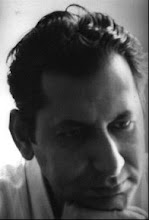
I called my father Abi.
It means 'My Father' in Arabic and even in Hebrew.

Ever since I posted one of Abi's Ghazals on Facebook, I have had two members of my extended family (and a couple of friends) tell me to do a blogpost about him. One blogpost wouldn't do, I thought when I started this one ... so this is Part 1 of the blogposts I will do about him.

This was his Ghazal that I posted
It's in his own handwriting.

•

Abi was born in Rampur on April 11th, 1900, to Safdar Ali and Mahlaqa Begum and was given two names (a feature that was common on those days): Khāqān Alam (a name that he never used) and Azhar Ali (from which he dropped the Ali).

His Urdu name was ازہر قدوائ … although many people wrote it as اظہر (a much more common name in Urdu). But surely you do remember Al-Azhar? That's الازہر. The two words have different meanings. The ظ one brings ظاہر o your mind. The ز one comes from the meaning of light: Think of the planet زہرا … (Btw, my name is زہیر عاؔلم قدوائ ).

Our last names are Kidvai (and is obviously part of the Qidwai, Quidwai, Kidwai, etc.). The reason why my father used the K/V is because we are descended from Kazi Kidva, a Turkish Judge who came to India with Mughal Emperor, Babar. In the Turkish alphabet there is no Q or W. You can see this here …

And surely you have seen Qur'an written as Koran

•


He went to Aligarh for his studies (as did his father and a couple of chachas). He graduated as a B.A. in English Literature. Was a strong member of the Congress Party and also strongly supported the Khilafat Movement. He spent a brief time in Jail, condemned by the British Rulers.

On his return from Jail he decided to put together an Urdu Collection of Essays and Short Stories. It was called Naee Paod. Here is the cover:


I have a copy (the book is no longer in print now) and will add a story in my second blogpost about him.

He also (occasionally) translated some verses from English into Rübāis and Qit'as. Here is one that you might like.


A little later he decided to go to Scotland for a Degree in Medicine. His father agreed and sent him there … but hardly sent any money later (although my grandfather had plenty, but that is another story).

He had a pretty bad time in Scotland where he was doing his Degrees and would never go out with his friends, saying he had a 'secret date'. Actually he went to a small restaurant and ordered hot water and poured it into a glass, adding the Tomato Sauce to make it like a soup. That was most of the time. His friends thought he was dating a famous person and were eventually eventually told that he was in hospital. His left kidney had failed. He had had an operation and was now living with just one kidney.

I heard about all the above from his close friend, Rashid Chacha, in Karachi. I was amazed that my father had never ever mentioned this to me. When I asked him why he had never said this to me, he said it was about him and his father and I had no business to interfere in this.
He had no money to pay for his exam and his very close friend (?), Auntie Dorothy, decided to loan him the money to appear for the exam. Two years later he came to India as his mother was dying with Cancer. After her death he married my mother and told her on the second day that he would not be able to run the house with what he used to get as he had to return the money to Auntie Dorothy. My mother gave him the jewellery that she had been given in her jahez and it was sold so the he could send the full money to Auntie Dorothy. (My parents lived in Aligarh and that's where I was born.)
When Abi was in Scotland, he practiced his Medicine in a small town called Monifieth. When I was in the Merchant Navy as a Second Officer, my First Officer - John W. Cowper (JWC) - gave me a letter to post to his father. I saw Monifieth on the address and mentioned it to Abi. He said he knew who this person was the son of and I mentioned tis to JWC. On the next trip to UK, JWC took me to Monifieth and I met many of Abi's old friends, including Auntie Dorothy and JWC's father. They all remembered him and said he was very funny and he cracked lots of jokes and puns. 

JWC died a year later soon after his father passed away and he was informed that 'as an adopted son' he had been given his father's money according to the will. He never knew that he was adopted. Came home. Drank for days. And was found dead. I told my father this and he said he knew that JWC was adopted but his father had said to all his friends never to say this to JWC.

•

More in my next blog.


Labels: , , , , ,

Wednesday, May 06, 2020

My Nānihāl … 1


Syed Iftikhar Husain
(s/o Afzal Ali)
was my Nana (= Maternal Grandfather)

Born: Allahabad 10 January 1868
He was also called Junaid Ahmad (his Aqiqah name) 
Died: Lucknow 24 April 1932 
Buried at Shah Karamat Ali's Dargah in Kakori

From Ummi (My mother: Sohail Fatima Iftikhar aka Kishwar Jehan) all I learnt about Nana Jan was that he was very particular about food and spoke very little. 

From my khaala (Vasim Fatima) I heard only that Nana Jan was very affectionate.

I know very little about him. What I have heard about him come mainly from my Mamooñ Jan (and father-in-law) … Syed Asaf Husain, and three of his children who must've heard many stories from him. MJ was a tremendous story teller with a brilliant memory … and he loved his father. He always said that Nana Jan was brilliant and very honest.

Nana Jan learnt Law but was never a practicing Lawyer. He was in the Indian Civil Service. However, he refused to obey the orders of his Commissioner in Lucknow (which said he was to convict all the people brought to him during the Khilafat Movement). He was then transferred to the Judicial Services. He became a Registrar of the Lucknow High Court. Later on he became a Judge of the Rajestan High Court.

A story that MJ told us all (and was also something that Ummi had said to me) was that Nana Jan was a FreeMason once, but had left the organisation and was no longer one.

My elder mamooñ, Mamooñ Sahab (Syed Arif Husain) was a person that I loved immensely. I used to spend time with him often when I left school. One day I asked him, "FreeMasons can't really leave, can they?" … and he laughed and said "Asaf says this because that's what our father may have said to calm him. Of course they can't leave." Sadly, MS died on 19th March 1955 of a heart attack.

Nana Jan and Nani Jan had an eldest daughter, Shamim, who died very young (14th June 1912). Akbar Allahabadi, a friend of Nana Jan, wrote her Tarikhé Vafāt:

شمیم خلد شدہ گفتِ فضلِ رحمانی

A newborn daughter, Tasneem Fatima, died in infancy.

•

Nana Jan died much before I was born … and I am older than my cousins. So none of us have any real memories of him except through our parents. (While I refer to him as Nana Jan in this post, in real life I called my wife Nuzhat's nana Nana Jan).

•

Nani Jan (Haseen Fatima) died when I was less than 3 years old but I remember her extremely well. I used to tell her stories that I insisted were real but they were really children's fantasies with family characters thrown in as birds.

Her death scene I remember so well about who was at her bedside: Abi (my father) reading a verse from the Quran; my aunt weeping. There were many people around at the time that she died.

One day, when I was around 11, I drew a map of who was sitting where. Ziauddin Kirmani (Māmooñ Abbu is what I called him) was visiting us and he had been there at Nani Jan's funeral. He was astonished to see how I could remember almost everyone and where they sat outside.

I was sent to Abi's cousin's house and when I got back they had buried her. I went into the bedroom and saw an empty bed. I asked and was told that Angels had taken her away to cure her. For a full year I thought all deaths meant that Angels had taken the person away.

Nani Jan passed away on 29th August 1943 and is buried at Takia Sharif next to her father, Muzaffar Husain Sahab, who was a Deputy Collector.

(My wife and I have always wondered why 
there were so many Deputy Collectors those days.)

•

Nani Jan had an elder brother, Mustafa Husain, who was the first Bar-at-Law from Kakori. She had a younger brother but I can't find his name so far. If I do, I will post it here.

Labels: , , , , , , , , , , , , , , ,

Saturday, April 11, 2020

I don't believe in coincidences, but …


My father
- Abi is what I called him -
was born on 11th April 1900

•

Abi loved books (English and Urdu) and poetry (which he also wrote in Urdu) and music (he had a lovely voice and could read Music in the way it was written in the West) and adored humour of all sorts. He wrote well - a bit strange for a Doctor - and his English and Urdu were really well-written. 

All my loves come from him.

More than anything else, he admired good movies: mainly English (finding the Urdu movies too similar and 'old fashioned', unless they had some good classical songs in them).

In the last days of his life - although he had been an Atheist in his college days and when he was in the UK (and I don't remember him saying his prayers until much later in life) - he became a strong Muslim, for reasons that I understand and have written about earlier, much to the annoyance of some erstwhile friends.

This meant that he stopped going to movies,
for they interfered with his prayer times.

In 1957 on his birthday I asked him to accompany me to a film, for it had his favourite actors: Charles Laughton, Marlene Dietrich, Tyrone Power, Elsa Lanchester. It was Agatha Christie's Witness for the Prosecution. I pleaded and pleaded and pleaded … and he finally agreed to go, saying that he would say his Maghrib Prayers as Qazā.

What an amazing film that was!
I have seen it a number of times since then.


After the movie he and I went to my Mamooñ Jan's place, where he said his Qazā Namāz. Shah Sahab was also staying at Mamooñ Jan's house. An amazingly interesting man, Shah Sahab seemed to read minds and then talk to someone in the crowd about something … but it actually was meant for someone else sitting in the crowd that came to see him. I don't believe such things any way.

When Abi came out and after a few minutes another friend dropped in, Shah Sahab addressed him and said Qazā can't be decided from before and is only permitted if you have missed a prayer. And it is certainly not allowed after a movie. I was there and no one had said Abi had gone to a movie and was now saying his Qazā prayers. Hmmm. 

It is now 11th April 2020

Nuzhat and I are in our Lockdown Mode and looking through YouTube … and I find Witness for the Prosecution. No. Not the version I had mentioned earlier, but a BBC TV version. Ralph Richardson (later a Sir), Deborah Kerr, Diana Riggs. All wonderful stars. I had never heard of this … and we decided to see it.

if you haven't seen the 1957 version.

•

Strange to find it on Abi's 120th birthday, though.

From Abi's birthday in 1957 to today is 63 years.
Abi died on 19th September 1963 at 63 years.

Labels: , , , , , , , , ,

Tuesday, July 23, 2019

Dr Syed Mahmud


Dr Syed Mahmud, Jawaharlal Nehru, Khwaja Abdul Majeed

Dr. Syed Mahmud was born in Bhhitri (a qasbah in UP, India). He was educated at the Aligarh Muslim University. During his time at the University, he became involved in student political activities and attended the 1905 session of the Indian National Congress, the largest Indian nationalist organisation in what was then British-ruled India. 

Dr. Mahmud was amongst the Muslim students who opposed the pro-British loyalties of the All India Muslim League and were drawn more to the nationalist Congress. After being expelled from Aligarh for his political activities, he travelled to England and studied Law at Cambridge University before going on to study at Lincoln's Inn to become a barrister.

In 1909, in London he came in contact with Mahatma Gandhi and Jawaharlal Nehru. In 1912, he obtained Ph.D. from Germany and came back to India, and from 1913 he started his legal profession in Patna under the able guidance of Mazharul Haq. In 1915, he married Mazharul Haq's niece. After practising law for a few years, he was soon drawn into the strengthening movement for India's independence.

In 1931 the Congress Party held a session in Karachi. There were roads named after the people who attended. Motilal Nehru Road later became Jigar Muradabadi Road (although Jigar was an Indian, too). There were smaller roads leading from Motilal Nehru Road and some had Muslim names that were not changed by our Government.

Dr Syed Mahmud Road was one of them. Many years later someone remembered that he actually lived in India and changed that road name, too.

Nana Jan was the Joint Secretary in the Congress Party for 16 years with Motilal Nehru and remained a very close friend of Jawaharlal Nehru. After India’s Independence he became the Foreign Minister and also visited Karachi which was the capital of Pakistan, then. I was extremely fond of him as he was of me.

My father's book of essays, short stories, and a play were items that he wrote between 1926 and 1931 and they were published under the title Naee Paod. (Just to get you what the prices were in those days: There were 1000 copies printed and it was priced at Rs 1). The book was dedicated to Nana Jan.

I always called him Nana Jan.
Nuzhat's mother was treated by my father as his young sister.

Nana Jan with Nuzhat and Khalid (who died so early) •
Nana Jan also appeared at Nuzhat and my wedding.
He seemed so old since I had last seen him.
Nana Jan with Nuzhat's mother (Jan Mammi) •
Indira Gandhi was a close friend of Jan Mammi,. She flew out of Karachi on Pandit Ji's death and remained with Indira Gandhi to carry Pandit Ji's ashes after his cremation.

Labels: , , , , , , , , , , , ,